
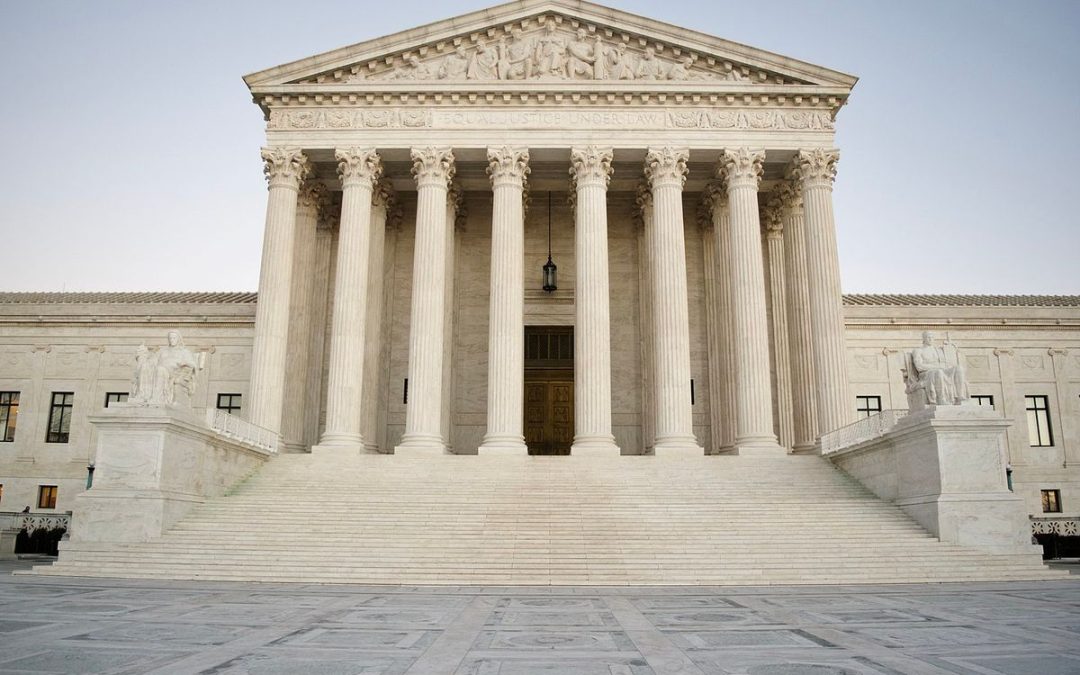
Analysis of the Supreme Court’s decisions most often focuses on the opinions and votes of the justices. Sometimes, though, strategic decisions by lawyers about how to argue a case may play a significant role in what the justices decide. When those strategic decisions are made by the solicitor general on behalf of the federal government, they take on extra significance and become of particular interest.
Let us start with a caveat. It is impossible to determine with any precision how influential litigation strategy is in the outcome of Supreme Court cases. Today, Trump Administration Solicitor General D. John Sauer is typically presenting conservative arguments to a conservative court; given that, the outcome of cases may simply be a reflection of the court’s approach to legal questions, rather than a product of strategic litigation choices. And even if strategy contributes to the outcome, there is no way to evaluate how much.
Nevertheless, let us look at a few interesting – and telling – choices made by Sauer and his staff of lawyers at the Department of Justice over the last two terms.
By way of background, the position of solicitor general was created by Congress in 1870 with the mandate that the holder of the office should be “learned in the law.” Today, the office handles the federal government’s cases in the Supreme Court, both defending positions taken by the executive branch and in most instances defending acts of Congress (on rare occasions, the solicitor general may decline to defend an act of Congress if the lawyers find no reasonable, good-faith basis to argue that a law is constitutional).
Indeed, the solicitor general is sometimes referred to as the “tenth justice” because of the uniquely influential role the office plays with the court. The court relies heavily on recommendations by the solicitor general on what cases to decide, especially when federal laws and policies are involved. The lawyers in the solicitor general’s office argue as parties or friends of the court in as many as 50 of the approximately 65 to 70 oral arguments in a typical term. By some estimates, the office is involved in as much as 90% of the court’s work. The solicitor general even has an office at the court.
The solicitor general is strategic in both what cases he brings before the court and how cases are presented to the justices. For example, one of the most interesting choices made by the solicitor general’s office in the second Trump administration involves the birthright citizenship issue.
Recall that on his first day returning to office on Jan. 20, 2025, Trump issued an executive order restricting eligibility for citizenship of people born in the United States to parents who do not have documented legal status or are in the country on a student, work, or tourist visa.
Numerous lawsuits were filed challenging the constitutionality of the executive order under the 14th Amendment’s citizenship clause, which states that “[a]ll persons born or naturalized in the United States, and subject to the jurisdiction thereof, are citizens of the United States.” Several federal district court judges issued injunctions blocking enforcement of Trump’s order, not only in the jurisdiction of their courts, but applied nationwide.
Before Sauer took office in April 2025, Acting Solicitor General Sarah Harris made the strategic choice to ask the Supreme Court for an emergency order blocking broad, nationwide injunctions and requiring judges to limit their rulings to the parties to the cases before them. “This Court should declare that enough is enough before district courts’ burgeoning reliance on universal injunctions becomes further entrenched,” Harris urged in a request for a stay.
When the court scheduled the request for an unusual oral argument in May 2025 after regularly scheduled arguments were completed and after Sauer was confirmed to be solicitor general, it was notable that the only issue before the justices was the legitimacy of nationwide injunctions, not the constitutionality of the birthright citizenship executive order.
With the benefit of hindsight, perhaps this was a prescient strategy choice by the solicitor general. In June 2025, a majority of the court ruled that nationwide injunctions issued by lower federal courts exceeded the jurisdiction of those courts. A year later in June 2026, however, a different majority narrowly invalidated Trump’s executive order itself as violating the 14th Amendment.
The choice to split in two the issues of nationwide injunctions and birthright citizenship allowed Trump to walk away with a victory on one issue, even if he ultimately lost on the birthright citizenship order. (The president has apparently decided not to give up on birthright citizenship, issuing a new executive order on Aug. 6.)
Had the two issues come to the court together in one case, would the outcome have been the exact same? There is no Supreme Court crystal ball, so the question is unanswerable. But the choice by Harris and then Sauer may well have played a part.
Two more cases from the most recent term reflect a similar story of strategic decisionmaking. Trump mounted a concerted campaign to be able to fire commissioners and board members of agencies long considered to be independent and only directly accountable to the president for dismissal “for cause,” which generally means illegal misconduct or malfeasance. Among his precipitative actions were the firing of Rebecca Slaughter, a member of the Federal Trade Commission, and Lisa Cook, a member of the Federal Reserve Board.
From the outset, commentators argued that there was a stronger case for the independence of monetary policy decisions made by the Federal Reserve Board given the role this plays in the global economy. Conversely, conservative scholars have chipped away for decades at the rationale for the independence of other agencies like the FTC or the National Labor Relations Board, an argument underscored in a friend-of-the-court brief filed by Edwin Meese, former attorney general to President Ronald Reagan and a longtime critic of the independent agencies.
In 1935, in the case of Humphrey's Executor v. United States, the court ruled that the president’s executive authority was not impinged by a federal law that protected a member of the FTC from being fired except for cause; the ruling meant the president could not fire the commissioner just because of policy disagreement.
Sauer may have faced the question of how closely to tether the two cases, which ostensibly raised similar questions and almost at exactly the same time. In Trump v. Slaughter, a lower federal court blocked Trump’s firing of her. Because the Supreme Court had previously issued stays confirming Trump’s firing of other agency officials, Sauer asked the court for a similar stay to keep Slaughter off the job. The justices agreed with Sauer and set the case for oral argument.
As the case moved forward, the main argument advanced by Sauer was that interfering with the president’s authority to fire Slaughter violated the Constitution’s separation of powers. Sauer argued that the FTC exercised executive powers that belonged to the president.
The Federal Reserve Board case, Trump v. Cook, followed a similar path but with one very important difference. Trump’s firing of Cook was blocked by a lower federal court, but when Sauer asked the Supreme Court for an emergency order, he did not challenge the constitutionality of the law limiting board firings by the president to “for cause” action. Instead, in the stay request and subsequent oral argument, Sauer, tracking Trump’s claims, alleged that Cook misrepresented information for two mortgages giving the president “cause” for her dismissal. Cook has denied any wrongdoing. Sauer also argued that the firing should not be subject to review in court. The court decided to hear argument in the case.
Why does this matter? By raising the constitutional argument only where it was strongest – in the Slaughter case and not in the Cook case – it is possible that this strategic choice contributed to the split outcome. In Slaughter, the court overturned the longstanding Humphrey’s Executor precedent and upheld the president’s action firing her. The court found that the “for cause” limitation violated the separation of powers in the Constitution which confers all executive power in the president.
In the Cook case, however, the court ruled more narrowly that she should remain in office while she continues to challenge her dismissal. The justices rejected the argument that courts cannot review dismissal of a member of the Federal Reserve Board and recognized the “Nation’s tradition of central banking protected from political interference.”
There is no way to know for sure but had the solicitor general argued that the independence of a FTC member and a Federal Reserve governor were identical encroachments on presidential power, it might have been more difficult for the court to give Trump the major victory of overruling Humphrey’s Executor.
There are numerous other examples of strategic decisions by the solicitor general, especially deciding when to make requests to the court for interim or emergency orders while cases are pending. Statistics vary, but according to one report by the Brennan Center for Justice, the DOJ in Trump’s second term has filed at least 28 such requests for interim relief and has been successful in 21. That high rate of success may, once again, reflect strategy concerning what cases to bring (and which not to bring, since they are likely to be lost) or may reflect a sympathetic court, or some combination of both.
Recent Comments