
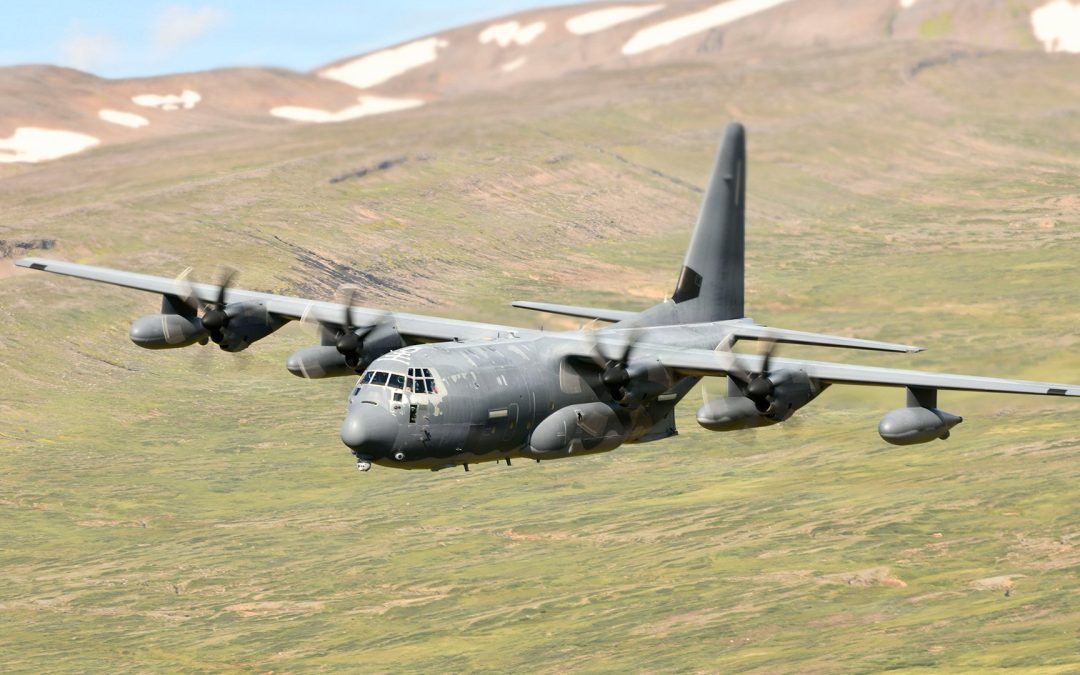
Air Force special operations crews appear to be using a major exercise in Iceland to test and train with cargo gliders to resupply ground teams in tough-to-reach locations.
At the Northern Viking 2026 exercise held this month near the northern city of Akureyri, an official with the 352d Special Operations Wing said the unit would be simulating the supply of ground troops with gliders dropped from the unit’s MC-130 cargo planes.
“Basically, we’ll be employing non-standard airdrop platforms to deliver logistical and medical supplies to far-forward troops,” said the 352nd’s commander for the exercise in a press release that did not identify the officer. “We specifically want to train in long-range resupply in contested environments and intend to airdrop a powered glider to a detachment of fellow U.S. servicemembers. This glider will be filled with supplies and airdropped to the servicemembers on the ground, validating our capability to deliver critical supplies to SOF teams operating far beyond friendly supply lines.”
The Northern Viking release did not specify the glider used in the exercise, but at the Trojan Footprint exercise in North Macedonia in May, U.S. special ops teams trained with a so-called Grasshopper “autonomous aerial resupply vehicle” dropped from Romanian planes.
Resupplying troops from the air, even in dangerous combat zones, is not a new skill for Air Force crews. The Air Force even has two kinds of single-use cargo parachutes for dropping dozens of packages of supplies in a single pass: a large, low-speed parachute similar to the one used by airborne infantry troops for relatively safe drop zones; and high-speed system, called the “low cost, high velocity,” or LCHV parachute, that fall as fast as 60 miles per hour for drops over active battlefields.
But with a glider, Air Force crews can resupply troops dozens of miles away.
In the May exercise in North Macedonia, U.S. troops used the Grasshopper. The long, coffin-shaped gliders were dropped from the rear of the cargo planes. In freefall, the glider’s wings extend to guide it towards a target. For landing, the glider deploys a parachute. Photos released during that exercise showed troops inspecting the glider on the ground, where it showed some minor damage.
Top Stories This Week
Top Stories This Week
According to manufacturer DZYNE, the Grasshopper and its long-range variant (which has an onboard turboprop) are both meant to accurately deliver a payload using a cheap and expendable frame and can each carry 500 pounds of cargo. The normal glider variant emits a very low electromagnetic signal.
Army Special Forces tested another airdropped glider, the GD-2000, at the Yuma Proving Ground in Arizona in 2023.
The post In Iceland, Air Force special ops crews test gliders for resupply appeared first on Task & Purpose.
Recent Comments