
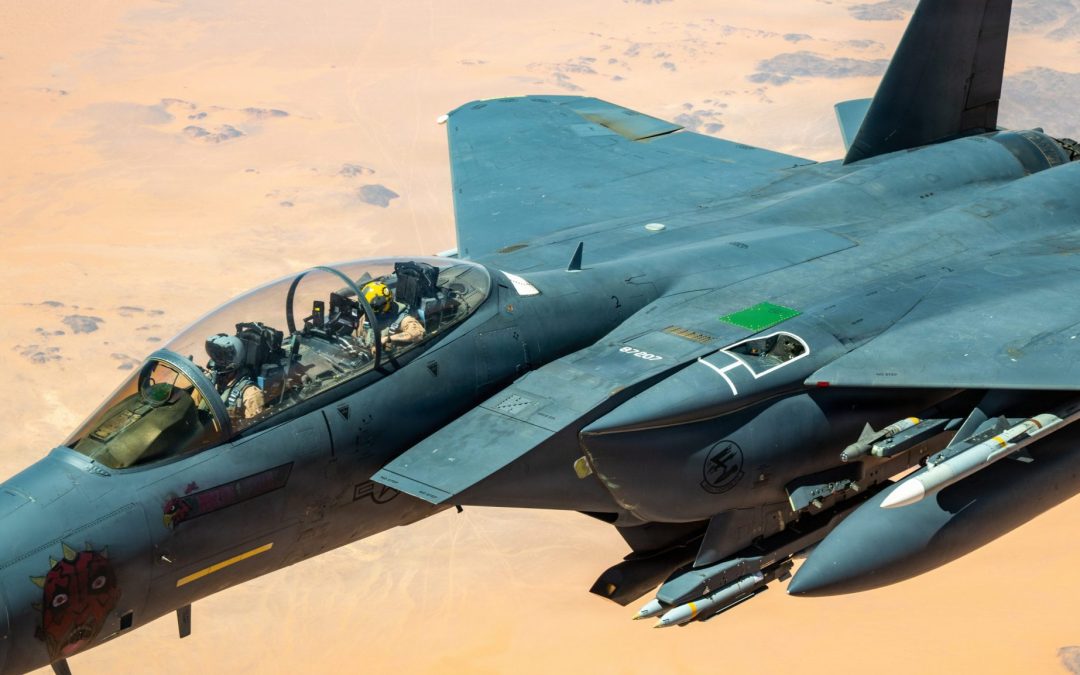
The weapons system officer from an F-15E that was shot down over Iran in April said it felt like the fighter jet was “hit by a freight train” when a shoulder-fired missile took out the plane.
The hit forced the two-person crew of the F-15E, dubbed “Dude 44,” to eject over Iran’s Zagros Mountains and the U.S. military to scramble to recover them before Iranian forces captured the two aviators. The effort spanned three days and put almost 100 U.S. troops on the ground in Iran. Several more U.S. aircraft were lost, some intentionally destroyed after becoming stuck in deep sand at a secret landing site.
The weapons system officer, who spent 50 hours awaiting rescue, spoke about the experience on CBS’ “60 Minutes” on Sunday evening.
The interview was the first real update on the large-scale rescue operation in nearly six months. It also featured remarks from U.S. Central Command chief Navy Adm. Brad Cooper and Chairman of the Joint Chiefs of Staff Air Force Gen. Dan Caine. Although many of the details, including the aircrew’s identities, remain unclear, it did shed new light on some aspects of the mission
The weapons system officer appeared on camera, but the nametapes on his uniform were obscured, and he was identified only by his callsign “Bravo.” (Crews of the two-person F-15E that become separated on the ground use “Alpha” to identify the pilot, “Bravo” for the weapons officer). He had previously been identified by President Donald Trump as a colonel. The F-15E pilot declined to be interviewed and also has not been identified. Both officers were assigned to the 494th Fighter Squadron.
Top Stories This Week
Speaking to reporter Norah O’Donnell, Bravo described the moment the aircraft was hit on April 3, and how the pilot quickly ejected them both, saying, “I will be thankful to my dying day for my pilot and crewmate, Alpha, for saving our lives and ejecting us.”
After the F-15E was downed, U.S. combat search and rescue forces rushed to recover them. One A-10 Thunderbolt close-air support plane was hit and went down during combat search and rescue flight, but the pilot ejected into safe territory. Air Force helicopters flew in to recover him within hours, taking fire during a daytime operation. According to Cooper, more than 1,000 Iranian military personnel were within a 10-mile radius.
Bravo, meanwhile, had a longer journey to being rescued. His parachute had been damaged during the explosion and he found himself “free-falling.” He ended up landing five miles away from his pilot. The speed of his landing, between 70-100 miles per hour, left him seriously injured in ways that had not previously been shared by the military. Sunday’s report said Bravo suffered a broken back, broken shoulder and broken arm, on top of other wounds. However, he kept moving and made contact with U.S. forces that day.
According to officials, including Defense Secretary Pete Hegseth, conditions “didn’t line up” to get to Bravo right away. So he had to wait it out for more than a day. He had reached high ground in the mountains and hid. U.S. drones fired on Iranian forces in the area to keep them at bay, as they also searched to capture the weapons systems officer.
While he did, U.S. special operations forces, including Air Force pararescue teams and elements of SEAL Team 6, set up a forward arming and refueling point, or FARP, a makeshift airfield in the Iranian desert. According to Cooper, around 92 U.S. troops were inside Iran for the mission, the first time in more than four decades American personnel were disclosed to be operating on Iranian soil.
Officials have said the rescue package included two Air Force special ops MC-130s, which delivered MH-6 “Little Bird” helicopters from the Army’s 160th Special Operations Aviation Regiment to the site. There, crews unloaded the small helicopters and prepped them for flight. Though a complicated mission, Air Force and Army special operators practiced the exact scenario on a Wyoming highway in 2023.
In Iran, the team located Bravo and a special operations helicopter carrying Air Force pararescuemen, or “PJs,” flew to him. Video footage shared on “60 Minutes” shows two PJs running to Bravo and then picking him up and taking him back to the helicopter.
“The moment a PJ showed up to me on that ridgeline was one of the greatest moments of my life,” Bravo said. “And I don’t know how to say it any more clearly than that. Thank you for all that they did.”
Two C-130s that flew the rescue teams in got stuck on the airfield’s soil and couldn’t take off. The U.S. flew in smaller planes, loaded the special operations teams and Bravo, and flew off. Before they left, American forces destroyed the aircraft left behind. Images shared by Iran showed multiple burnt wrecks in the desert, including two helicopters and a C-130.
The shootdown in April is currently the last time a crewed U.S. aircraft was downed by Iran in the war. A Navy helicopter crashed in the Arabian Sea in July, killing the commanding officer of Helicopter Sea Combat Squadron 5, but the Navy said the incident was “non-hostile.”
The post Air Force colonel recounts ‘Dude 44’ rescue that put almost 100 troops inside Iran appeared first on Task & Purpose.
Recent Comments