
Physician Non-Compete Laws: A 50-State Guide (2026)
By Adam Appleberry | Current as of September 2026
The landscape for physician non-competes is changing rapidly.
Over the last several years, states across the country have enacted new laws limiting, and in some cases outright banning, non-competes for physicians and other healthcare providers.
But the rules are far from uniform. In some states, physician non-competes are completely void. In others, they remain enforceable but are limited by duration, geographic scope, compensation, employer type, or the circumstances surrounding termination. And in plenty of states, they remain generally enforceable.
Simply put, there is no single rule governing physician non-competes across the country.
So, where does your state fall?
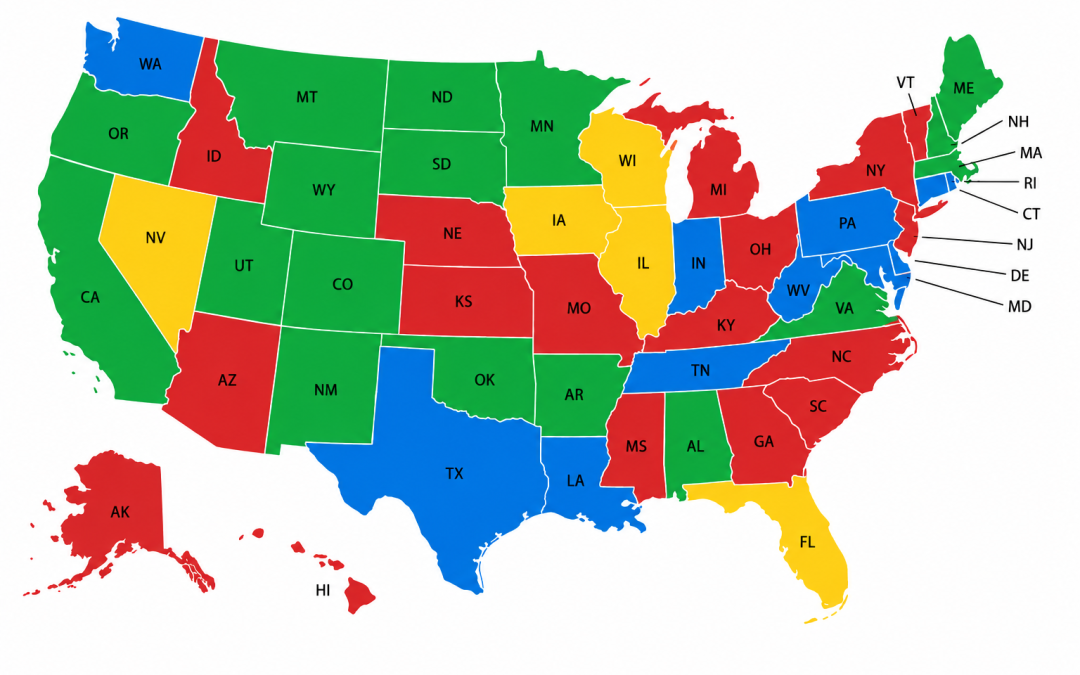
The map below provides a state-by-state snapshot of physician non-compete laws as of September 2026.
🟢 Banned / Void for Physicians
🔵 Allowed, but Significantly Restricted
🟡 Allowed, with Some Restrictions
🔴 Generally Allowed
How to Read the Map
I have divided the states into four general categories:
🟢 Banned / Void for Physicians. Physician non-competes are generally prohibited or unenforceable.
(Alabama*, Arkansas, California, Colorado, Maine, Massachusetts, Minnesota, Montana, New Hampshire, New Mexico, North Dakota, Oklahoma, Oregon, Rhode Island, South Dakota, Utah, Virginia, and Wyoming)
🔵 Allowed, but Significantly Restricted. Physician non-competes are still permitted, but state law places meaningful limits on them, such as a maximum duration or geographic radius, or makes them unenforceable in certain circumstances.
(Connecticut, Delaware, Indiana, Louisiana, Maryland, Pennsylvania, Tennessee, Texas, Washington, West Virginia, and Washington, D.C.)
🟡 Allowed, with Some Restrictions. Physician non-competes remain generally permissible, but other state laws may affect when or how they can be enforced.
(Florida, Illinois, Iowa, Nevada, and Wisconsin)
🔴 Generally Allowed. Physician non-competes remain generally permissible, subject primarily to traditional requirements that the restriction be reasonable.
(Alaska, Arizona, Georgia, Hawaii, Idaho, Kansas, Kentucky, Michigan, Mississippi, Missouri, Nebraska, New Jersey, New York, North Carolina, Ohio, South Carolina, and Vermont)
*Alabama reaches this result through its treatment of physicians as professionals rather than through a physician-specific statutory ban.
One important caveat: the map is intended as a general snapshot, not a definitive answer as to whether a particular non-compete is enforceable. The details matter. The date you signed your agreement, your specialty, your compensation, how your employment ended, and the specific language of the restriction can all change the analysis.
Also, a state prohibiting non-competes does not necessarily mean your contract cannot restrict you in other ways. Patient non-solicitation provisions, confidentiality requirements, repayment obligations, and restrictions connected to the sale of a practice or ownership interest may be treated differently.
What Happened to the FTC’s Nationwide Non-Compete Ban?
Before getting into the states, it is worth addressing the federal rule that received significant attention in 2024.
In April 2024, the Federal Trade Commission issued a rule that would have prohibited most employee non-compete agreements nationwide. The rule was challenged in federal court and never became enforceable. The FTC ultimately abandoned its effort to defend the rule.
So, there is currently no nationwide FTC ban on physician non-competes.
That does not mean federal regulators have completely left the issue alone. The FTC has instead pursued non-competes through more targeted enforcement actions, including scrutiny of restrictive covenants in healthcare.
And the answer varies significantly depending on where you practice.
State-by-State Guide
Alabama Physician Non-Compete Law 🟢
Physician non-competes are generally unenforceable in Alabama.
Although Alabama law permits certain restrictive covenants, physicians have traditionally been treated as professionals whose ability to practice cannot be restricted through an ordinary employment non-compete.
That does not necessarily mean every restriction in a physician’s agreement is invalid. Restrictions connected to the sale of a practice, ownership interests, confidential information, or other contractual obligations may be treated differently.
For an employed physician, however, Alabama is generally a non-compete-friendly state from the physician’s perspective.
Alaska Physician Non-Compete Law 🔴
Alaska does not have a physician-specific non-compete law.
That means physician non-competes may be enforceable if they are reasonable and protect a legitimate interest of the employer.
For physicians, the important questions are usually how long the restriction lasts, how large the geographic area is, what activities are actually prohibited, and whether the restriction goes further than necessary to protect the practice.
There is no simple statutory mileage or time limit that automatically answers the question.
Arizona Physician Non-Compete Law 🔴
Arizona allows physician non-competes, but courts scrutinize them carefully because of the effect they can have on patients.
Patient choice and continuity of care are particularly important considerations.
So, while a physician non-compete is not automatically invalid in Arizona, an employer generally cannot impose a restriction that unnecessarily interferes with a physician’s ability to continue practicing or with patients’ ability to continue seeing their physician.
The specific specialty, geographic area, duration, and availability of other physicians can all matter.
Arkansas Physician Non-Compete Law 🟢
Arkansas changed its physician non-compete law in 2025.
Under the new law, a covenant that restricts a physician’s ability to practice within the physician’s scope of practice is generally void.
For physicians practicing medicine or osteopathy, that means an employer generally cannot prevent the physician from continuing to practice after leaving employment.
Other restrictions, including confidentiality obligations and certain protections involving business information, may still remain enforceable.
California Physician Non-Compete Law 🟢
California has long taken one of the strongest positions against non-competes in the country.
Physician employment non-competes are generally void.
California has also taken additional steps to prevent employers from using contracts governed by another state’s law to avoid California’s restrictions, and newer legislation addresses restrictive covenants in certain healthcare ownership and management arrangements.
There are important exceptions, particularly when a physician sells a business or ownership interest.
But for a physician simply leaving employment, a traditional agreement prohibiting the physician from practicing nearby is generally unenforceable.
Colorado Physician Non-Compete Law 🟢
Colorado now generally prohibits non-competes for physicians, dentists, and advanced practice registered nurses.
For agreements entered into on or after August 6, 2025, employers generally cannot prevent these providers from continuing to practice after leaving.
Colorado also protects a departing provider’s ability to communicate certain information to patients, which can be just as important as the non-compete itself.
Older agreements require separate analysis, so physicians who signed their contracts before the law changed should not automatically assume the newer prohibition applies.
Connecticut Physician Non-Compete Law 🔵
Connecticut allows physician non-competes, but places clear limits on them.
A physician restriction generally cannot last longer than one year or extend more than fifteen miles from the physician’s primary practice site.
How the employment relationship ends also matters. The law limits enforcement in certain situations where the employer terminates the physician without cause or declines to renew the agreement.
So, if you are a Connecticut physician reviewing a non-compete, the duration and mileage are only part of the analysis. You should also look closely at the termination provisions in your agreement.
Delaware Physician Non-Compete Law 🔵
Delaware takes an unusual approach to physician non-competes.
An agreement generally cannot prohibit a physician from practicing medicine in a particular geographic area after leaving a practice.
However, the agreement may still require the physician to pay reasonable damages if the physician competes.
That distinction is important. Your former employer may not necessarily be able to stop you from opening or joining a competing practice, but there may still be a significant financial consequence for doing so.
Florida Physician Non-Compete Law 🟡
Florida generally allows physician non-competes.
There is no statewide ban on restricting physicians from competing after employment, and Florida law is relatively favorable to enforcement when the employer has a legitimate business interest and the restriction is reasonably tailored to protect it.
Florida does have a narrow physician-specific restriction that can apply when a single entity employs or contracts with all physicians practicing a particular specialty within a county.
For most physicians, however, the important questions remain the length of the restriction, the geographic area, the employer’s legitimate business interests, and the circumstances surrounding the physician’s practice.
Georgia Physician Non-Compete Law 🔴
Georgia generally allows physician non-competes.
A restriction still needs to be reasonable, but Georgia law is comparatively favorable to employers seeking to enforce restrictive covenants.
Courts also have greater ability than courts in some states to narrow an overly broad restriction rather than throwing it out entirely.
For a physician, that means an aggressive non-compete should not automatically be assumed unenforceable simply because part of it appears too broad.
Hawaii Physician Non-Compete Law 🔴
Hawaii does not have a physician-specific prohibition on non-competes.
Although Hawaii has prohibited non-competes for certain technology workers, that protection does not generally extend to physicians.
Physician restrictions therefore remain potentially enforceable if they satisfy the state’s general requirements.
Idaho Physician Non-Compete Law 🔴
Idaho generally permits non-competes for certain key employees and independent contractors, which can include physicians.
There is no broad physician or healthcare exemption.
As a result, physicians should pay particular attention to the duration, geographic scope, and activities covered by the restriction before signing.
Illinois Physician Non-Compete Law 🟡
Illinois allows physician non-competes but regulates restrictive covenants more broadly through compensation thresholds and procedural requirements.
For example, employees must receive advance notice of the non-compete and must be advised in writing that they have the right to consult with an attorney before signing.
Illinois also prohibits non-competes for employees below specified compensation levels, although most physicians will earn above the applicable threshold.
So, for most physicians, a non-compete remains possible, but the employer must satisfy the state’s statutory requirements.
Indiana Physician Non-Compete Law 🔵
Indiana has significantly restricted physician non-competes in recent years.
Primary care physician non-competes are prohibited for newer agreements, and more recent legislation has substantially limited non-competes imposed by hospitals, hospital systems, and certain affiliated entities.
Other physician non-competes may still be enforceable, but Indiana law provides additional protections involving patient records, patient notification, and the physician’s ability to buy out the restriction.
The practical question in Indiana is no longer simply whether you are a physician, but rather who employs you, what type of medicine you practice, and when you signed the agreement, as these factors all can change the answer.
Iowa Physician Non-Compete Law 🟡
Iowa generally allows reasonable physician non-competes.
There is no statewide prohibition covering physicians working for private practices, hospitals, or most other healthcare employers.
There are, however, some targeted exceptions. Healthcare employment agencies face certain restrictions, and legislation effective July 1, 2026 requires the University of Iowa Hospitals and Clinics to prohibit non-competes in certain healthcare provider employment agreements.
For most Iowa physicians outside those specific situations, traditional non-compete rules still apply.
Kansas Physician Non-Compete Law 🔴
Kansas generally allows physician non-competes.
There is no physician-specific statutory ban, and Kansas courts have historically enforced physician restrictions when they are reasonably tailored.
For physicians, the key issues are typically the length of the restriction, geographic area, specialty being restricted, and whether the employer has a legitimate interest that actually needs protection.
Kentucky Physician Non-Compete Law 🔴
Kentucky does not have a comprehensive physician non-compete ban.
Physician restrictions may therefore be enforceable if they are reasonable.
As in many states without healthcare-specific legislation, the analysis will depend heavily on the actual contract language, including how long the restriction lasts, where it applies, and what type of work the physician is prohibited from performing.
Louisiana Physician Non-Compete Law 🔵
Louisiana allows physician non-competes, but the rules are unusually specific.
A Louisiana non-compete generally must identify the parishes or municipalities where the restriction applies rather than simply using a mileage radius.
Physicians also receive additional protection based on how long they have worked under the agreement. Under newer legislation, the ability to enforce the non-compete expires after a specified period of employment, generally three years for certain primary care physicians and five years for other physicians.
So, in Louisiana, how long you have worked for the employer may be just as important as how long the non-compete lasts after you leave.
Maine Physician Non-Compete Law 🟢
Maine significantly expanded its healthcare non-compete protections in 2026.
For newer agreements, non-competes are generally prohibited for covered healthcare practitioners who do not have an ownership interest in the employer.
That ownership distinction matters. An employed physician with no ownership interest may receive substantially greater protection than a physician who is also an owner of the practice.
The new law applies prospectively, so physicians with older agreements should have those agreements analyzed under the law that applied when they were signed or renewed.
Maryland Physician Non-Compete Law 🔵
Maryland uses a compensation-based approach for healthcare providers.
For covered providers who provide direct patient care and earn $350,000 or less annually, non-competes are generally prohibited.
Physicians earning more than $350,000 may still be subject to a non-compete, but the restriction is generally limited to one year and ten miles from the physician’s primary place of employment.
That means compensation itself can determine whether a Maryland physician may be restricted at all.
Massachusetts Physician Non-Compete Law 🟢
Massachusetts generally prohibits physician non-competes.
An agreement restricting a physician’s ability to practice medicine after leaving employment is generally unenforceable.
Massachusetts has maintained this physician-specific protection for decades, even though non-competes remain permissible in certain other employment contexts.
Other contractual restrictions, including confidentiality obligations and restrictions connected to the sale of a practice, should still be reviewed separately.
Michigan Physician Non-Compete Law 🔴
Michigan generally allows physician non-competes.
A restriction must still be reasonable in duration, geography, and the type of work being restricted.
Michigan courts also have the ability to narrow an overly broad covenant rather than necessarily invalidating the entire restriction.
For physicians, that means a non-compete that appears too broad on its face should not automatically be assumed unenforceable.
Minnesota Physician Non-Compete Law 🟢
Minnesota prohibits most employee non-competes entered into on or after July 1, 2023.
That prohibition applies to physicians.
The date of the agreement is therefore particularly important. A physician who signed a non-compete before July 1, 2023 may be in a different position from a physician who signed the same restriction after that date.
The law also does not eliminate every type of restrictive covenant, so confidentiality, trade secret, and certain non-solicitation provisions may still matter.
Mississippi Physician Non-Compete Law 🔴
Mississippi does not have a physician-specific non-compete statute.
Physician non-competes may therefore be enforceable if they are reasonable.
Courts can consider the public interest, including the effect a restriction may have on access to medical care, but there is no automatic rule making physician restrictions invalid.
Missouri Physician Non-Compete Law 🔴
Missouri generally allows physician non-competes.
There is currently no statewide physician-specific prohibition, although healthcare non-compete legislation has been proposed.
For now, physicians should expect enforceability to depend primarily on whether the restriction is reasonable in duration, geography, and scope.
Montana Physician Non-Compete Law 🟢
Montana significantly expanded non-compete protections for healthcare professionals beginning in 2026.
For covered newer contracts, employers generally cannot prevent physicians and other covered healthcare professionals from continuing to practice after leaving.
The law also limits certain restrictions involving a provider’s existing patients.
As in several other states, exceptions may apply to practice sales, ownership transactions, and repayment of certain recruitment incentives.
The date of the agreement or renewal is important.
Nebraska Physician Non-Compete Law 🔴
Nebraska allows physician non-competes, but the permissible scope is relatively narrow.
A restriction generally needs to focus on protecting patient or customer relationships the physician actually developed rather than simply preventing the physician from competing throughout a large geographic area.
That can make broad restrictions particularly difficult to enforce.
Physicians should nevertheless not assume that the entire non-compete disappears simply because Nebraska applies a narrow standard.
Nevada Physician Non-Compete Law 🟡
Nevada generally permits physician non-competes.
The state has statutory requirements governing restrictive covenants generally, including protections for certain hourly employees and employees affected by reductions in force.
There is no broad physician-specific prohibition.
For most physicians, enforceability will depend on whether the restriction is reasonably necessary and appropriately limited.
New Hampshire Physician Non-Compete Law 🟢
New Hampshire prohibits physician non-competes.
A physician generally cannot be prevented from practicing medicine in a particular geographic area after leaving employment.
New Hampshire has also expanded similar protections to certain other healthcare professionals.
As always, restrictions involving confidentiality, patient information, or ownership transactions may still be treated differently.
New Jersey Physician Non-Compete Law 🔴
New Jersey generally allows physician non-competes.
However, courts consider the effect of the restriction on patients and the public, not simply the interests of the physician and employer.
That means access to care, physician availability, and continuity of treatment can become important when determining whether a restriction should be enforced.
New Jersey has considered broader non-compete legislation, but physician non-competes remain potentially enforceable as of September 2026.
New Mexico Physician Non-Compete Law 🟢
New Mexico generally prohibits non-competes for covered healthcare practitioners.
That protection has been in place longer than many of the newer physician non-compete laws appearing around the country.
The prohibition does not mean every post-employment obligation disappears. Confidentiality provisions and certain repayment requirements may remain enforceable.
But a traditional restriction preventing a covered healthcare practitioner from continuing to practice is generally prohibited.
New York Physician Non-Compete Law 🔴
New York continues to allow physician non-competes.
A broad statewide non-compete ban passed the legislature in 2023 but was vetoed, so New York continues to evaluate restrictions under its existing reasonableness framework.
For physicians, courts may also consider the effect of the restriction on the public and access to medical services.
So, while physician non-competes remain possible in New York, the specific duration, geography, specialty, and circumstances matter.
North Carolina Physician Non-Compete Law 🔴
North Carolina generally allows physician non-competes.
The restriction must still be reasonable and appropriately tailored to protect the employer’s legitimate interests.
North Carolina is also relatively unforgiving of poor drafting. Courts have limited ability to rewrite an overly broad restriction simply to make it enforceable.
For physicians, that means the exact wording of the non-compete can be particularly important.
North Dakota Physician Non-Compete Law 🟢
North Dakota broadly prohibits employee non-competes, including physician non-competes.
A physician generally cannot be prevented from continuing to practice after leaving an employer.
There are limited exceptions, particularly involving the sale of a business or certain ownership transactions.
For a traditional employed physician, however, North Dakota provides strong protection against non-competes.
Ohio Physician Non-Compete Law 🔴
Ohio generally allows physician non-competes.
Restrictions must be reasonable, and courts have the ability to modify a covenant that goes further than necessary.
There is currently no comprehensive physician-specific prohibition.
As a result, physicians should pay close attention to the duration, geographic radius, specialty restrictions, and circumstances in which the covenant applies.
Oklahoma Physician Non-Compete Law 🟢
Oklahoma generally prohibits traditional employee non-competes.
That means an employer usually cannot simply prevent a physician from practicing for a competitor after leaving.
However, Oklahoma does permit certain restrictions against directly soliciting established customers. In the healthcare setting, that can potentially affect how a departing physician communicates with former patients.
So, while the physician may be free to compete, the agreement’s patient non-solicitation language still deserves careful attention.
Oregon Physician Non-Compete Law 🟢
Oregon significantly expanded protection for physicians and certain other medical professionals in 2025.
Traditional non-competes involving covered physicians and other specified providers are now generally void, subject to exceptions.
Ownership is particularly important. Some exceptions depend on whether the provider owns an interest in the practice or is involved in a transaction involving that ownership.
For physicians working in MSO, private equity, or other complex practice structures, the corporate structure can therefore materially affect the analysis.
Pennsylvania Physician Non-Compete Law 🔵
Pennsylvania significantly restricted healthcare non-competes beginning January 1, 2025.
For covered healthcare practitioners, including physicians, CRNPs, physician assistants, and CRNAs, a non-compete generally cannot last longer than one year.
There is another important protection: if the employer “dismisses” the practitioner, the non-compete is unenforceable.
Unlike some states, Pennsylvania does not impose a specific mileage limit. So, while a one-year restriction may be permitted, the geographic scope still needs to be evaluated separately.
The law applies to agreements entered into on or after January 1, 2025. If you signed your agreement before that date, the older Pennsylvania rules may still apply.
Rhode Island Physician Non-Compete Law 🟢
Rhode Island generally prohibits physician non-competes.
An employer generally cannot prevent a physician from practicing medicine within a geographic area after the employment relationship ends.
There are exceptions, including certain restrictions associated with the purchase and sale of a physician practice.
For most employed physicians, however, a traditional post-employment non-compete is generally unenforceable.
South Carolina Physician Non-Compete Law 🔴
South Carolina generally allows physician non-competes.
The restriction must be reasonable and narrowly drafted.
South Carolina courts are also reluctant to rescue an employer from an overly broad covenant by rewriting it. As a result, the specific language used in the agreement can be critical.
There is no broad physician-specific statutory ban.
South Dakota Physician Non-Compete Law 🟢
South Dakota generally prohibits physician non-competes for agreements entered into on or after July 1, 2023.
The law applies broadly to physicians and numerous other licensed healthcare professionals. A covered agreement generally cannot restrict a physician from practicing or providing professional services within the physician’s scope of practice after the employment or other professional relationship ends.
There are important exceptions. Restrictions connected to the sale of a practice or ownership interest may still be permitted. Employers may also restrict a departing physician from actively soliciting current patients, subject to the geographic and time limitations permitted under South Dakota law.
Physicians with agreements entered into before July 1, 2023 should have those agreements reviewed separately because the statutory prohibition applies to agreements entered into on or after that date.
Tennessee Physician Non-Compete Law 🔵
Tennessee allows physician non-competes, but places statutory limits on them.
A physician restriction generally cannot last longer than two years and must comply with specific geographic limitations tied to where the physician practiced.
Tennessee law also permits certain alternative arrangements involving a contractual buyout of the restriction.
So, a physician non-compete remains possible, but an employer does not have unlimited discretion over how broadly it can be written.
Texas Physician Non-Compete Law 🔵
Texas significantly tightened its physician non-compete requirements for agreements entered into or renewed on or after September 1, 2025.
A physician non-compete generally cannot last longer than one year or extend more than five miles from the location where the physician primarily practiced.
The agreement must also contain a buyout provision, and the buyout cannot exceed the physician’s total annual salary and wages at the time employment ends.
There is another major protection: the non-compete is unenforceable if the physician is involuntarily terminated without good cause.
So, if you are reviewing a Texas physician agreement signed or renewed after September 1, 2025, one year, five miles, the buyout amount, and the termination language are the key provisions to check.
Utah Physician Non-Compete Law 🟢
Utah significantly restricted healthcare non-competes in 2026.
For covered healthcare workers entering into agreements after the law’s effective date, traditional employment non-competes are generally prohibited.
The protection extends beyond physicians to a broader group of licensed healthcare professionals.
There are exceptions, including certain ownership, business-sale, and severance arrangements, so the circumstances surrounding the restriction still matter.
Older agreements also need to be evaluated under the law in effect when they were entered.
Vermont Physician Non-Compete Law 🔴
Vermont does not have a comprehensive physician non-compete ban.
Physician restrictions may therefore remain enforceable if they are reasonable.
There is no simple statutory mileage or duration rule specifically protecting physicians, so enforceability depends heavily on the language and circumstances of the individual agreement.
Virginia Physician Non-Compete Law 🟢
Virginia significantly expanded healthcare non-compete protections effective July 1, 2026.
For new agreements involving covered licensed healthcare professionals, traditional non-competes are generally prohibited.
Virginia has also adopted additional protections affecting certain employees who are terminated without cause.
The timing is important. Physicians with agreements predating the 2026 changes should not automatically assume that the newer prohibition invalidates an existing restriction.
Washington Physician Non-Compete Law 🔵, Becoming 🟢 in 2027
Washington currently allows non-competes only under fairly restrictive conditions, including compensation thresholds and other statutory requirements.
But Washington has already enacted a much bigger change.
Beginning June 30, 2027, non-competes will be void and unenforceable in Washington regardless of when the agreement was originally signed.
That means the change reaches existing non-competes, not merely new agreements signed after the law takes effect.
Employers will also be required to provide notice to certain current and former workers that their non-competes are no longer enforceable.
For Washington physicians, there is therefore an unusual distinction between what the law allows today and what it will allow beginning June 30, 2027.
Washington, D.C. Physician Non-Compete Law 🔵
Washington, D.C. uses compensation thresholds rather than categorically prohibiting physician non-competes.
Employees below the applicable annual compensation threshold generally cannot be subject to a non-compete. A separate and higher threshold applies to qualifying medical specialists.
Physicians above the applicable threshold may still be subject to a non-compete, although the restriction must comply with D.C.’s statutory requirements.
Because the compensation thresholds are adjusted periodically, physicians should check the threshold applicable during the year the agreement is entered.
West Virginia Physician Non-Compete Law 🔵
West Virginia allows physician non-competes, but places significant limits on them.
A physician restriction generally cannot last longer than one year or extend more than thirty road miles from the physician’s primary place of practice.
How the employment relationship ends also matters. A physician non-compete is generally unenforceable if the employer terminates the physician.
Different rules may apply to physician owners and transactions involving the sale of a practice or ownership interest.
Wisconsin Physician Non-Compete Law 🟡
Wisconsin allows physician non-competes, but its restrictive covenant law is particularly strict about overbroad agreements.
A restriction must be reasonably necessary to protect the employer and appropriately limited in its scope.
Wisconsin courts generally cannot simply rewrite an unreasonable restriction to make it enforceable.
For physicians, that makes the actual wording of the agreement especially important.
Wyoming Physician Non-Compete Law 🟢
Wyoming significantly changed its non-compete law beginning July 1, 2025.
Under the newer law, a covenant restricting a physician’s right to practice medicine after the employment relationship ends is generally void.
There are exceptions, including certain business-sale and ownership situations.
The effective date also matters. Physicians with older agreements should not automatically assume that the newer law eliminates a restriction that predates the statutory change.
What This Means for Physicians
1. Do Not Assume Your Non-Compete Is Enforceable Just Because Your Signed It
This is probably the biggest takeaway.
Employment agreements regularly contain provisions that are partially or completely unenforceable under applicable state law.
And with the number of states changing their physician non-compete laws, language that may have been enforceable when an employer first developed its agreement may no longer comply with current law.
The fact that the restriction appears in your signed contract does not end the analysis.
2. Check When Your Signed the Agreement
The effective date of these laws matters.
Many of the newer physician protections apply only to agreements entered into, renewed, or amended after a particular date.
That means two physicians working for the same employer can have different rights even if their contracts contain identical language.
One may have signed before the law changed. The other may have signed afterward.
Always identify when the agreement was signed and whether it has subsequently been renewed or amended.
3. Look at What Happens if Your Employer Terminates You
In several states, the reason the employment relationship ends can determine whether the non-compete survives.
Pennsylvania, Texas, Connecticut, Indiana, West Virginia, and other states provide protections that can depend on how or why the physician’s employment ended.
This becomes especially important when negotiating termination provisions.
A physician should understand not only what the non-compete says, but also what events actually trigger it.
4. Ownership Can Change the Rules
An employed physician and a physician-owner may receive very different treatment.
Several states preserve non-competes in connection with the sale of a practice or an ownership interest even though they prohibit ordinary employee non-competes.
That distinction is increasingly important as physicians receive equity, participate in practice buy-ins, sell practices, or work within private equity and MSO structures.
If ownership is involved, do not assume the rules applicable to an ordinary physician employment agreement will apply.
5. No Non-Compete Does Not Mean No Restrictions
A state may prohibit your employer from stopping you from practicing medicine nearby and still permit other contractual protections.
Your agreement may contain:
- patient non-solicitation provisions;
- employee non-solicitation provisions;
- confidentiality and trade secret restrictions;
- repayment obligations for signing bonuses or relocation expenses;
- training-cost repayment provisions;
- notice requirements; and
- restrictions connected to the sale of a practice or ownership interest.
Those provisions can have a significant practical effect even when the traditional non-compete itself is unenforceable.
The Bottom Line
Physician non-compete law has changed dramatically over the past several years, and the trend has generally been toward greater restrictions on when healthcare employers can prevent physicians from continuing to practice.
But there is still no single national rule.
A physician in California may face a completely different set of restrictions from a physician in Florida. A physician in Pennsylvania who signed an agreement in 2026 may have different rights from a colleague who signed in 2024. And in states like Texas and West Virginia, how the employment relationship ends may determine whether the restriction can be enforced at all.
So, if you are reviewing an employment agreement or considering leaving your current practice, do not stop at the language of the non-compete itself.
Where you practice, when you signed, who employs you, whether you have an ownership interest, and how your employment ends can all change the answer.
Author: Adam J. Appleberry, Esq.
This article provides a general overview of physician restrictive covenant law as of September 2026 and is not legal advice. Non-compete laws continue to change quickly, and many of the laws discussed above contain exceptions, definitions, effective dates, and transition rules that may materially affect an individual agreement. The applicable law and specific agreement should be reviewed before making employment or practice decisions.
Recent Comments