
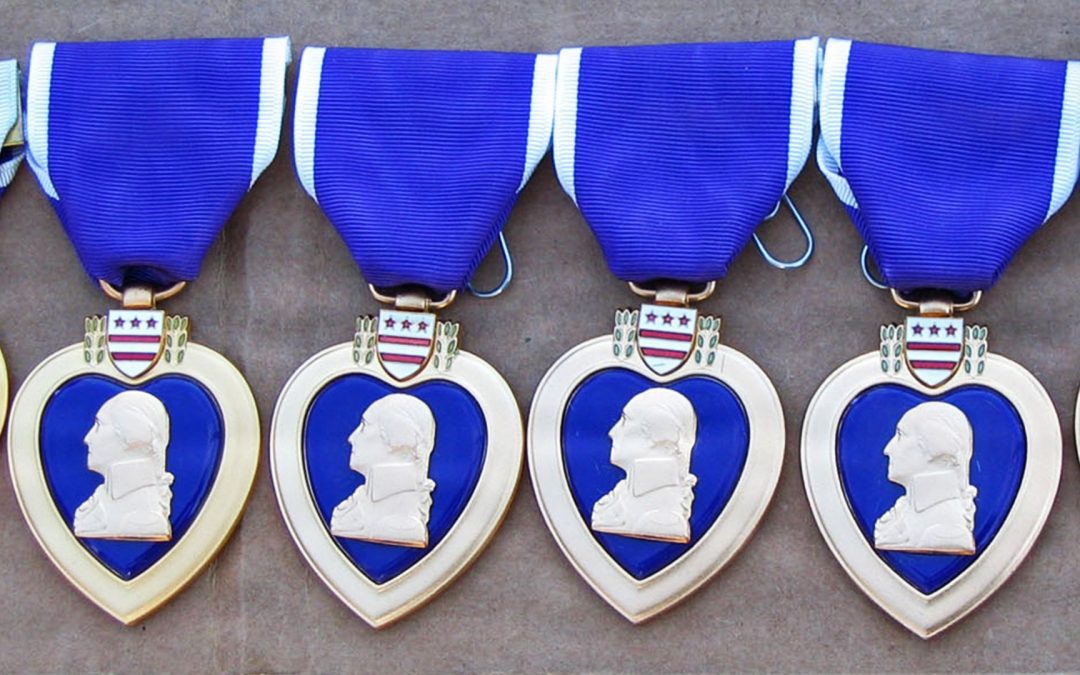
American service members have been awarded 202 Purple Hearts in the Iran war so far, officials told Task & Purpose, the vast majority to soldiers in the Army or Army Reserve.
Purple Hearts are awarded to U.S. service members from all branches who are wounded or killed in support of U.S. combat operations.
As of early October, 184 soldiers, 16 airmen, one Marine, and one sailor have received Purple Hearts.
Eleven of the Purple Hearts, an Army official said, were posthumously awarded to soldiers killed in action. As of Oct. 13, the Pentagon counts 21 service members killed in action during the conflict or who died while deployed in support of those operations.
The number of Purple Hearts awarded to date, which the military has not previously disclosed, is about one-quarter of the total number of troops that Pentagon officials say have been wounded or killed in combat with Iran. According to the Defense Department’s official casualty database, 865 troops have been wounded or died in the Iran war, which the Pentagon divides into Operation Epic Fury for combat prior to May 5 and refers to as Overseas Operations since.
Army personnel have taken the brunt of the casualties since the war began, with 659 soldiers wounded as of Oct. 15. An Army official said 184 Purple Heart awards were awarded as of Oct. 8, but more are pending.
Approval times for Purple Hearts can vary widely
Service members often say that the Purple Heart is the most revered award in the military that no one wants to receive.
But for those who are wounded in action, delays in approvals of a Purple Heart award are not uncommon. Like nearly all military decorations, the award has extensive rules that require paperwork and approvals. Some awards have been handed out years or even a decade after a service member was wounded. Many personnel who suffered traumatic brain injuries in previous conflicts only became eligible for the award with recent recognition of the condition as a wound of war.
The VA estimates that more than 1.9 million Purple Hearts have been awarded to U.S. service members, but officials note there is no official tally of the total number of recipients. Veterans with a Purple Heart are often eligible for greater access to certain benefits from the Department of Veterans Affairs, like higher-priority health care services, reduced co-payments, disability claim compensation, school tuition coverage, and home loan fees. Awardees can also get higher preferences for federal jobs.
According to the Army site on award criteria, “enemy-related injuries” that would qualify for a Purple Heart include wounds from bullets, shrapnel, mines, vehicle or aircraft accidents, concussions or TBIs resulting in a loss of consciousness or duty restriction for more than 48 hours from explosions. Wounds that likely are not eligible include those from environmental factors like frostbite or heat stroke, hearing loss, and post-traumatic stress disorders.
According to the rules that govern the award, a service member who suffers multiple wounds or injuries in a single incident is only eligible for one Purple Heart. For any subsequent events and injuries that are Purple Heart-eligible, troops receive an Oak Leaf Cluster that is worn on the medal or ribbon.
“When contemplating an award of this decoration, the key issue that commanders must take into consideration is the degree to which the enemy caused the injury. The fact that the proposed recipient was participating in direct or indirect combat operations is a necessary prerequisite, but is not sole justification for award,” according to an Army page on award eligibility.
As the Iran war has dragged on, media reports and members of Congress have scrutinized the information and lack of context around numbers in the Pentagon’s casualty database.
The post Over 200 troops have been awarded Purple Hearts during the Iran war appeared first on Task & Purpose.
Recent Comments