
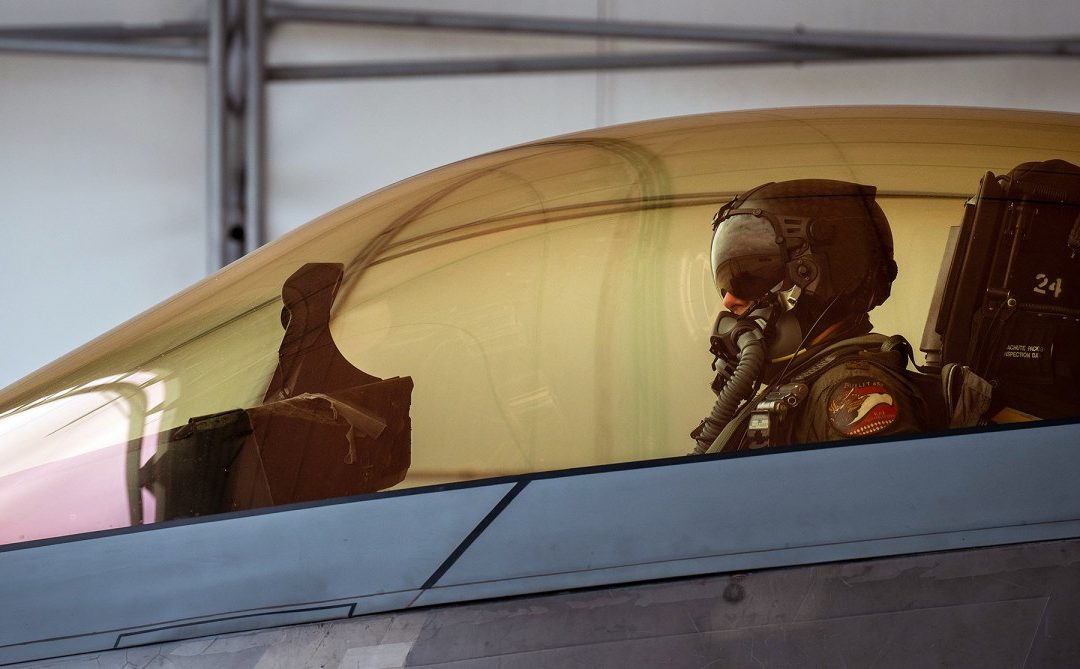
The Air Force is buying new helmets for fixed-wing aviators that are said to be lighter, better ventilated, and more adaptable to new technology than the current helmet — the HGU-55/P — that’s been in use for more than 40 years.
On Nov. 5, LIFT Airborne Technologies announced it was awarded a 10-year contract with the Air Force for its AV2.2 Next Generation Fixed Wing Helmet system. The contract is worth up to $83.4 million and up to 16,000 helmets, which would be more than enough for all the commissioned fixed-wing aviators in the active-duty Air Force.
And Air Force spokesman told Task & Purpose that the service expects deliveries of the helmet to begin in late summer 2027, with the goal of reaching initial operational capability that September.
The one fixed-wing community not included in the contract are F-35 fighter pilots, who have their own brain buckets that cost about as much as a Ferrari. All other fixed-wing aviators have worn the HGU-55/P since the 1980s.
But times are changing, and the Air Force said it needs different gear to help aircrew stay healthy and to keep up with new technology. That said, it is not clear at this time which units will receive the helmets first.
Pain in the neck
The HGU-55/P weighs about 2.2 pounds. That may not sound like much, but the pounds add up in high-G maneuvers. A human head weighs about 10 or 11 pounds. That plus a two-pound helmet, plus the weight of any attached heads-up displays or night-vision goggles, and it totals about 120 pounds sitting on the pilot’s neck in a 9G turn.
Top Stories This Week
Not all maneuvers are that aggressive, but over time the strain forces many fighter pilots out of the cockpit. A 2019 medical study reported neck pain as a significant health problem affecting 51% of fighter pilots, of whom 39% reported time lost from flying.
According to a LIFT fact sheet, the basic variant of the small- and medium-sized AV2.2 weighs 1.95 pounds, while the large and extra-large versions weigh 2.01 and 2.19 pounds, respectively.
It’s not just the weight, but the center of gravity that counts, and the new helmets are designed so that night-vision goggles, targeting systems, and other gadgets balance better on a pilot’s head to reduce strain.
Point of view
One F-22 pilot raved about the AV2.2 when he flew with it in 2023.
“The design of the helmet allows for unparalleled visibility, mobility, and comfort in the cockpit,” Maj. Brett Gedman said in an Air Force press release at the time. “The increased visibility combined with the mobility … made it a massive improvement over what I am used to flying with. It is clear this has been a generational leap in technology that the fighter pilot deserves, which is long overdue.”
One enlisted support airman liked the new helmet, too. With the HGU-55/P, support airmen had to use power tools to add mounting brackets for night vision goggles and new heads-up displays. The AV2.2 is modular, so they can just swap out mounting attachments and pop on the new gear. That flexibility should also help as new technology comes online.
“From a pre-flight and build-up standpoint, the new helmet is much better,” Airman 1st Class Matthew Crouse, an aircrew flight equipment technician, said in the 2023 release.
The new headwear also has a moisture-wicking helmet liner and vents in the back so crew members’ heads don’t become sweaty swamps: a problem several pilots encountered with the older helmets, they told Task & Purpose in 2021.
There is still development left to go as LIFT fine-tunes the AV2.2’s attachments for mounting heads-up displays and other gadgets. It was also not immediately clear exactly how many helmets the Air Force plans to buy, or which aircrews will receive them first.
Todd Lentz, chief revenue officer for LIFT, told Task & Purpose that the number of helmets delivered over ten years will depend on a number of factors, such as the population of pilots, the size and make-up of the aircraft fleet, and the cost per helmet.
The post Air Force buying up to 16,000 new helmets to replace 40-year-old model appeared first on Task & Purpose.
Recent Comments