
Vietnam Veteran, Cherokee citizen and family man reflects a lifetime of courage, service and humility
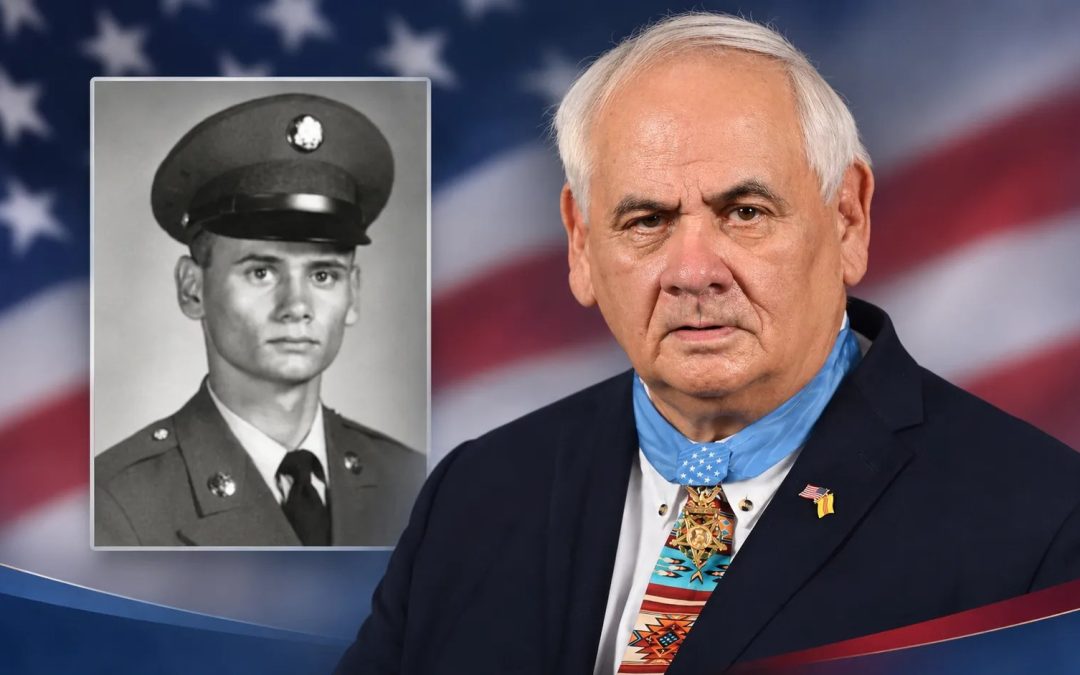
Long before earning the Medal of Honor, Dwight W. Birdwell was a young Cherokee man from rural Oklahoma who believed in hard work, service and doing the right thing when others needed help. Those values would carry him through one of the Vietnam War’s most intense battles and continue to guide his life for decades afterward.
For National Native American Heritage Month, we honor Birdwell, an Army Veteran, citizen of the Cherokee Nation, Medal of Honor recipient, attorney, former Cherokee Nation Supreme Court justice, husband, father and grandfather.
A battle that changed history
On Jan. 31, 1968, during the opening hours of the Tet Offensive, then-Specialist Five Birdwell and his unit, Troop C, 3rd Squadron, 4th Cavalry Regiment, 25th Infantry Division, rushed to defend Tan Son Nhut Air Base near Saigon. What they encountered was overwhelming enemy fire from a force estimated to be several battalions strong.
When his tank commander was severely wounded, Birdwell moved him to safety and assumed command. Despite intense enemy fire, equipment failures and his own wounds, he continued fighting. He organized defensive positions, redistributed ammunition, helped evacuate wounded soldiers and led counterattacks until reinforcements arrived. His actions saved lives and helped repel the assault.
More than five decades later, he was presented with the Medal of Honor for his extraordinary heroism.
Yet, those who know him best say his greatest qualities have never been found in a citation.
The man behind the medal
To his daughter, Stephanie Birdwell, who is the executive director of VA’s Office of Tribal Government Relations, he has always been so much more than a decorated Veteran.
“Even though my dad was young when I was born, I always remember him being very serious and hardworking,” she said. “He was very strict and had high standards for his children in terms of behavior and school.”
Like many Vietnam Veterans, Dwight rarely spoke about his wartime experiences when his children were young.
“I really didn’t understand his military service when I was very young,” Stephanie recalled. “When he started attending military reunions, I started getting to know those he served with, and some of those folks became like family to us.”
Over time, she began to understand not only the events that occurred in Vietnam, but also the lifelong bonds forged among the Veterans who served together.
A family receives life-changing news
One of the most memorable moments came in 2022 when her father called with unexpected news.
“I was driving when my dad called,” Stephanie said. “He matter-of-factly told me that he’d received a call from the White House and that he would be receiving the Medal of Honor. I replied, ‘Wait… what did you just say?’”
The recognition had been years in the making. Former commanders, fellow Veterans and advocates had long worked to ensure that his actions during the Tet Offensive received the nation’s highest military honor.
Attending the White House ceremony remains one of the family’s most cherished memories.
“It felt like history in the making, but we were living the history,” she said. “It felt like a dream.”
Guided by Cherokee values
Raised in the predominantly Cherokee community of Bell, Oklahoma, Dwight never forgot the values instilled in him as a child.
According to his daughter, his Cherokee heritage shaped the way he approached military service, family and community.
“My dad really took to heart pride in his Cherokee heritage and the values instilled in him, including hard work, being a good neighbor and taking care of others as if they were your own family.”
She says her father viewed military service not only as an opportunity but as a responsibility.
“He saw military service as an opportunity for his life as well as an obligation as a Cherokee person to serve our country,” she said.
The foundation of a life
No story about Dwight would be complete without highlighting the person he credits as his greatest source of strength: his wife, Virginia.
The couple married in 1969 and built their life together following Dwight’s return from Vietnam. While he pursued higher education and later established a distinguished legal career, Virginia helped provide stability, support and encouragement every step of the way.
“My dad describes my mom as his best friend,” Stephanie said. “I think she provided him with an anchor or stability that he really needed once he came home from service.”
Together they raised two children and built a family grounded in faith, culture and service.
Humility as a legacy
Despite receiving the nation’s highest military award, Dwight remains focused on the people around him.
“My dad really has a big heart and empathy for others,” Stephanie said. “He’s genuinely interested in other people and always emphasizes that every job done is important and the people doing those jobs are worthy of courtesy and respect.”
According to his family, he believes the Medal of Honor belongs not only to him, but also to the soldiers who fought alongside him, the families who sacrificed and the men who never came home.
Remembering a lifetime of service
During National Native American Heritage Month, VA honors the service, sacrifice and enduring contributions of Native American and Alaska Native Veterans.
Dwight Birdwell’s journey, from a young Cherokee soldier who answered his nation’s call during Vietnam to a Medal of Honor recipient, attorney, judge, husband, father and grandfather, reflects a lifetime devoted to service.
“I hope future generations remember that, as a young man—an ordinary person—he and his unit stepped up to do something extraordinary in seemingly impossible circumstances,” Stephanie said. “I hope they remember his values as a person and that he loved his country, his family, his heritage and culture, and believed in the potential of others.”
Recent Comments