
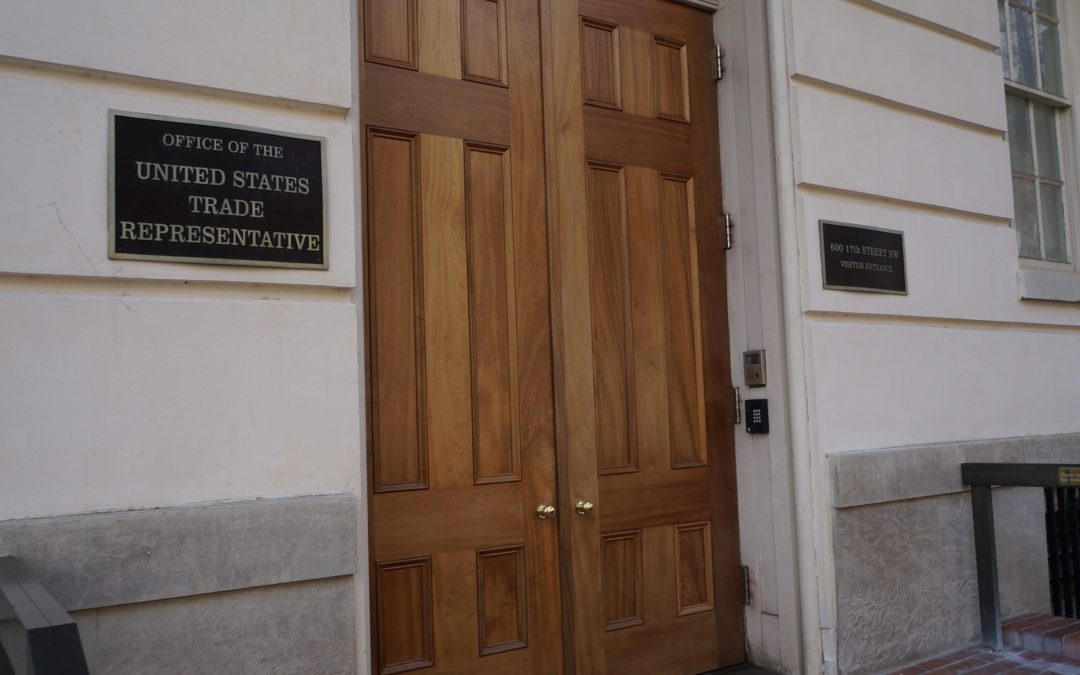
The Office of the United States Trade Representative (USTR) has announced the imposition of new Section 301 tariffs under S the Trade Act of 1974. Following investigations into global forced labor policies, the USTR has determined that 60 economies have failed to adequately impose or enforce prohibitions on the importation of goods produced with forced labor. The tariffs take effect at 12:01 a.m. Eastern Time beginning July 24, 2026.
Background
On March 12, 2026, USTR initiated 60 investigations under Section 302(b)(1) of the Trade Act of 1974, examining whether various economies had failed to impose and effectively enforce a prohibition on the importation of goods produced with forced labor. On June 2, 2026, USTR determined that actionable conduct existed in each investigation, publishing a comprehensive report and a Federal Register notice proposing remedial tariffs. Following public comments, a three-day public hearing, and government-to-government consultations, the USTR submitted recommendations to the President. Subsequently, on July 23, 2026, the President issued a Memorandum directing the tariff actions described below.
Which Economies/Countries Are Subject to the Tariffs?
A total of 60 countries and their respective economies are subject to tariffs.
In particular, USTR found that the following 54 economies have failed to impose and effectively enforce a prohibition on the importation of goods produced with forced labor:
Algeria; Angola; Argentina; Australia; the Bahamas; Bahrain; Bangladesh; Brazil; Cambodia; Chile; People’s Republic of China; Colombia; Costa Rica; Dominican Republic; Egypt; El Salvador; Guatemala; Guyana; Honduras; Hong Kong, China; India; Iraq; Israel; Japan; Jordan; Kazakhstan; Kuwait; Libya; Malaysia; Morocco; New Zealand; Nicaragua; Nigeria; Norway; Oman; Peru; the Philippines; Qatar; Russia; Saudi Arabia; Singapore; South Africa; South Korea; Sri Lanka; Switzerland; Taiwan; Thailand; Trinidad and Tobago; Türkiye; United Arab Emirates; United Kingdom; Uruguay; Venezuela; and Vietnam.
Additionally, the USTR indicated the following six countries and their respective economies have failed to effectively enforce a prohibition on the importation of goods produced with forced labor:
Canada, Ecuador, the European Union, Indonesia, Mexico and Pakistan.
Tariff Rates
In accordance with the President’s direction, the USTR is applying different country specific tariff rates based on an economy’s commitments and current regulatory regime.
- 10% Flat Tariff Rate: Argentina, Bangladesh, Cambodia, Canada, Ecuador, El Salvador, Guatemala, Honduras, India, Indonesia, Jordan, Malaysia, Mexico, Pakistan, Sri Lanka, Trinidad and Tobago, and the United Kingdom.
- 10% or 12.5% Net of Most Favored Nation (MFN) Duty: Applies to the European Union and Taiwan (capped at 10% total including MFN duty), and to Japan, South Korea, and Switzerland (capped at 12.5% total). Where an economy’s existing MFN duty meets or exceeds the applicable cap, the Section 301 tariff rate is zero.
- 12.5% Flat Tariff Rate: This applies to all other investigated economies not falling into the above categories.
In Transit Exemption
A limited in-transit exemption is available for goods loaded onto a vessel at the port of loading and in transit on the final mode of transit before 12:01 a.m. Eastern Time on July 24, 2026, provided those goods are entered for consumption (or withdrawn from warehouse for consumption) before 12:01 a.m. Eastern Time on July 28, 2026.
General Exemptions:
While the new Section 301 tariffs apply broadly to all goods from the 60 investigated economies and countries, the USTR has established critical exemptions to mitigate adverse impacts on the U.S. economy and supply chains.
The specific products exempt from the tariffs are identified by Harmonized Tariff Schedule (HTS) subheading in Annex I and Annex II. Annex I formally modifies Chapter 99 of the HTSUS to implement the new duties and establishes the rules for broad exceptions. Annex II, by contrast, contains a comprehensive, line by line list of the specific HTS subheadings that are excluded from the tariffs. Notably, Annex II includes a table of contents and is organized into distinct sections. Part A identifies general product exclusions that apply to imports from any of the 60 investigated economies, while Parts B through O set forth highly specific product exclusions that apply only to goods originating from particular economies, such as the United Kingdom, the European Union, and Taiwan. Please see Annex II for a complete list of economy specific exemptions.
In addition, importers and the trade community should be aware of two major carve-outs. First, goods already subject to Section 232 tariffs are exempt. Second, goods from Canada and Mexico that qualify for duty-free treatment under the USMCA are NOT subject to the new Section 301 tariffs.
Tariff Rate Quotas (TRQs) for Textile Economies
For Bangladesh, Cambodia, Indonesia, and Malaysia, USTR will establish TRQs for an initial three-year period covering certain textile and apparel imports. Separate TRQs will be tied to each economy’s importation of U.S.-origin cotton and textile goods, allowing specified volumes of qualifying imports to enter the United States free of the Section 301 tariffs. Until the TRQs are implemented, covered textile and apparel imports from these four economies remain subject to the 10% tariff. The program is intended to encourage the use of U.S.–origin inputs and reduce reliance on inputs that may be associated with forced labor
Foreign Trade Zone
Products of an affected economy admitted to a U.S. foreign trade zone on or after the effective date may only be admitted under “privileged foreign status” (19 C.F.R. § 146.41) and may not be admitted under “domestic status” (19 C.F.R. § 146.43).
For additional information, please refer to USTR’s press release, which includes a fact sheet and other helpful resources.
The Husch Blackwell International Trade and Supply Chain team will continue to monitor latest developments on this and provide updates as they become available. If you have any questions about this, please contact your Husch Blackwell attorney.
Recent Comments