
The NewYorkTimesMagazine.com had a story about how “The world’s most valuable assets are stored on rows of servers in giant, anonymous buildings. And they can be stolen.” The July 12, 2026 magazine story entitled ” How a Gang of Thieves Pulled Off a Multimillion-Dollar Data Center Heist” (https://www.nytimes.com/2026/07/12/magazine/data-center-heist.html) includes these comments from author Nathaniel Rich about a robbery of a “…data center [which] was operated by the business division of Verizon, which had inherited the facility, and about 20 other data centers, through a recent series of corporate mergers:”
The world’s most valuable commodity is not stored in banks, jewelry boutiques or the Louvre. It lives in giant, anonymous, energy-devouring warehouses filled with fiber-optic cables, industrial-scale cooling systems and server racks.
The latest generation of data centers will mainly be used, at a cost of several trillion dollars, to power artificial intelligence. Until now, however, the primary function of data centers has been to store the world’s information. The entire searchable internet, for instance, lives in data centers. But that’s not all. Data centers also store most private digital systems: your email accounts; your medical, pension and educational records; every book and archive ever digitized; every social network and dating app; every government and corporate database. Nearly any time you access electronic data — any time you swipe or scroll or speak a voice command — you rely on the services of a data center.
The public fogginess about data centers is not an accident. It is the product of a willful strategy by the world’s largest tech corporations, whose business models rest on the public assumption that the internet, and all the data it holds, is as immaterial as air — or as a cloud, to borrow the metaphor commonly used to describe the sum of information stored on servers. As the digital-media scholar Tung-Hui Hu writes in “A Prehistory of the Cloud,” the cloud “hides its physical location by design.”
This use of “cloud” dates back at least as far as the mid-1990s, but it didn’t enter the public consciousness for another decade, after the chief executives of Amazon and Google began to market the wonders of “cloud computing.” Information, they declared, had been liberated — emancipated from the prison of the desktop computer and evaporated into the atmosphere. The cloud soon became a permanent feature of the cultural landscape. Many of us began to believe that digital information had actually become vaporous. The metaphor evoked mantras that tech boosters recited with religious zeal, like “Everything is connected” or “Information wants to be free.”
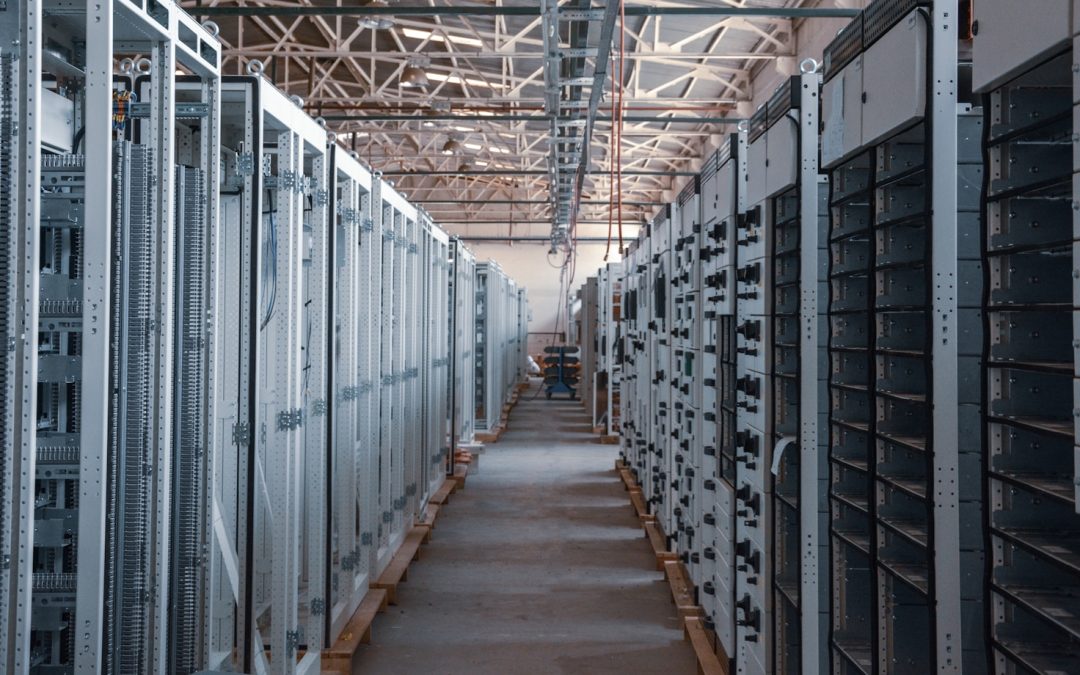
But information does not float in the air. It is encoded on servers: computers without monitors or keyboards, rectangular boxes dotted with blinking LEDs, stacked in vast grids held in warehouses. Our phones and tablets and laptops are so light because they contain little more than a screen, a battery and an antenna. Their powers are merely borrowed, at up to 1,000 megabits per second, from data centers.
Anyone surprised?
First published at https://www.vogelitlaw.com/blog/watch-out-for-a-multimillion-dollar-data-center-heist
Recent Comments