
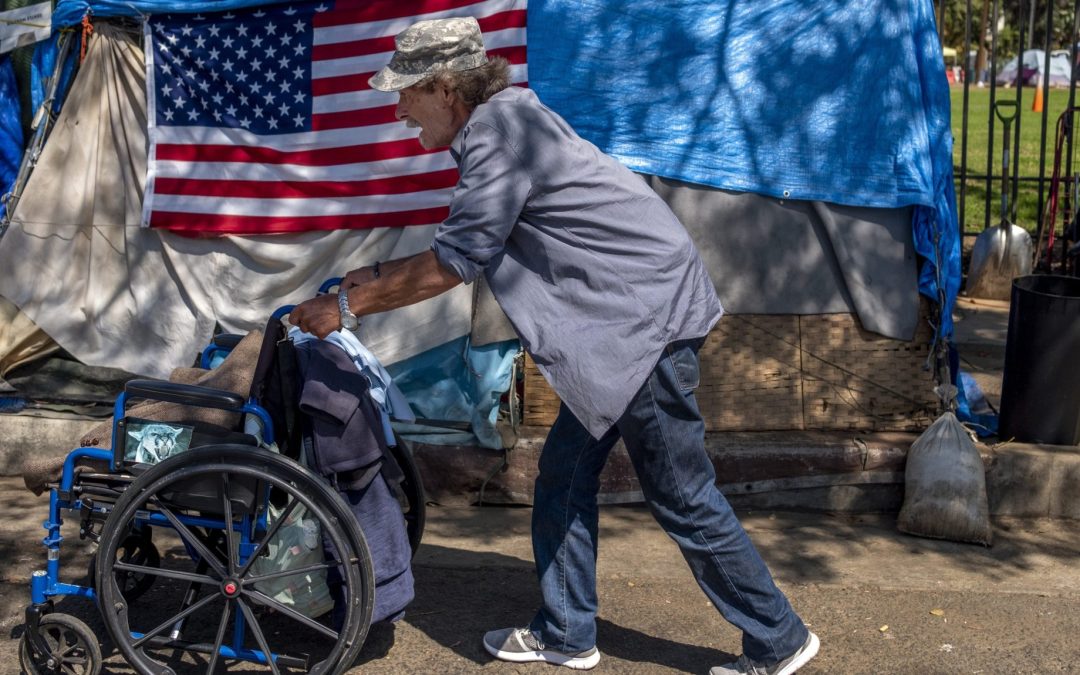
One of the biggest challenges in getting homeless veterans connected to resources, advocates say, is often simply staying in touch with the thousands who live on the streets.
“It’s not uncommon for veterans to be qualified into programs, but then for the outreach worker to struggle to find them for weeks,” said Kathryn Monet, CEO of the National Coalition for Homeless Veterans. “That is a big and seemingly preventable struggle. Surely there should be a way if we can find people to get them the benefits that they’re entitled to.”
A new rule announced last week reestablishes COVID-era programs that allow the Department of Veterans Affairs to provide tablets, smartphones, disposable phones and related service plans to veterans so they can stay connected to resources like doctors, future employers, housing leads and their families. Eligible veterans are those who would be “unable to maintain contact” with VA services without the assistance.
The new assistance comes from the Senator Elizabeth Dole 21st Century Veterans Healthcare and Benefits Improvement Act, a comprehensive law that addresses various VA programs and services related to health care, benefits, and support for veterans without permanent homes.
The law also allows the VA to provide items for “safety and survival,” like food, clothing, and blankets. These services and resources will be provided to eligible veterans through Sept. 30, 2027, the notice says.
VA staff will also provide transportation assistance “as necessary” in the form of vouchers for public transit like the bus or metro, or with contracted rideshare services, like Uber or Lyft. The purpose, according to the rule, is to help homeless veterans get to doctors appointments, court hearings, the grocery store or attend meetings for legal services or housing placements.
During the pandemic, more than 44,000 veterans used the rideshare program for 494,000 rides.
Monet said the law grants VA the same kind of authority and flexible funding that was previously available during the COVID-19 pandemic. She said it “took way too long” to bring back resources that coalition officials said help solve “logistical problems that stand between a veteran and available housing,” like transportation to an appointment or a phone to communicate with a potential landlord.
“It really is an authority that was designed to close some of the gaps that you see when you’re out doing outreach to veterans,” Monet said.
A problem with unclear data
There isn’t one official number of homeless veterans that advocates agree on, but adding available data together creates a full picture, Monet said.
The most recent Department of Housing and Urban Development’s point-in-time national homeless count reported 32,495 homeless veterans on a night in January 2025. That figure, the coalition noted, was the lowest recorded since 2009. But it also meant that veterans made up 5% of all adults experiencing homelessness on a given night, a number roughly in line with the number of veterans in the U.S. population.
In the 2025 calendar year, the VA said it permanently housed 51,936 veterans across the U.S.
Beyond everyday needs, Monet also said that cell phones can be lifesaving in extreme cases like natural disasters.
“In a hurricane, when you have a cell phone, you get an alert saying ‘The weather’s gonna change, go inside.’ Or you see it on the TV. But if you’re an unsheltered veteran and you’re out in a ravine in Arizona, you might not know that the weather’s gonna change, and the water can be really detrimental,” she said. “There are some basic common sense things, but there are also these other extremes when you think about the weather disasters and what it really means to be able to be in touch with the world around you.”
The post VA will provide phones, rideshares to homeless vets facing ‘outreach gaps’ appeared first on Task & Purpose.
Recent Comments