
Chughtai v. ByHeart, Inc., Target Corporation, Organic West Milk, Inc. and Dairy Farmers of America, Inc. (W.D. Wash., No. 2:26-cv-02798-LK) · Bogard v. ABTB Louisville LLC, Taylor Fresh Foods, Inc. and Taylor Farms California, Inc. (W.D. Ky., No. 3:26-cv-00607-RGJ) · Nance v. Coast Citrus Distributors, LLC (C.D. Ill., Springfield Division)
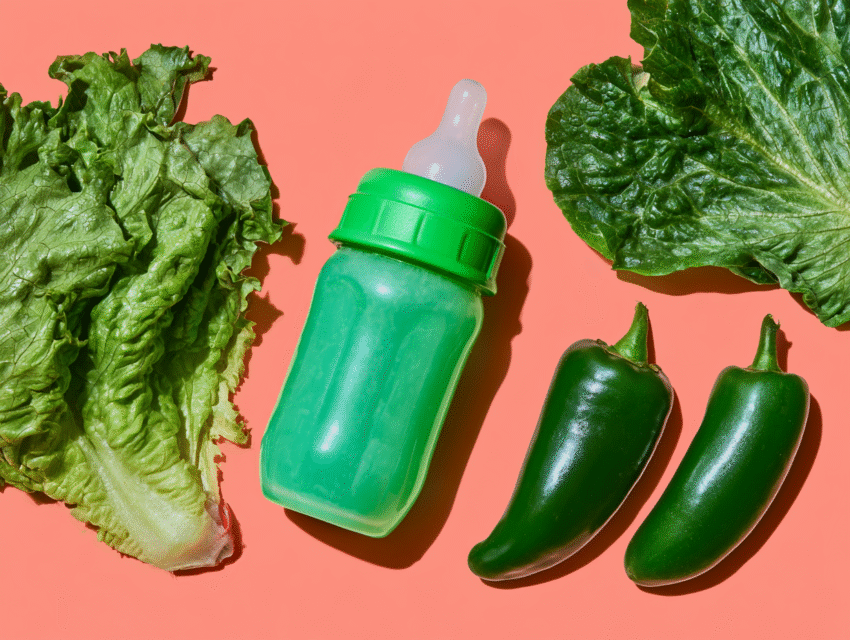
BAINBRIDGE ISLAND, Wash., August 11, 2026 — Marler Clark, The Food Safety Law Firm, has filed three foodborne illness complaints in three federal courts. The plaintiffs are a Bothell, Washington toddler who spent thirty-eight days in a hospital before his first birthday, a sixty-eight-year-old Louisville man with a five-vessel bypass and a prior stroke, and an Illinois food service worker who was ordered off the job by her county health department. Three pathogens, three supply chains, three sets of defendants. What the cases have in common is that none of these people had any dealing with the company whose product made them sick. In each one the contamination came in upstream, in an ingredient: whole milk powder into a can of infant formula, shredded iceberg lettuce into a burrito box, jalapeño peppers into a bowl at a chain restaurant.
The infant formula case. A.C. was born August 4, 2023 at Swedish Medical Center in Issaquah, a premature twin at thirty-six weeks, and went home healthy. His parents began feeding him ByHeart Whole Nutrition powdered infant formula in December 2023, bought at the Target store at Factoria Square Mall in Bellevue. He developed a low-grade fever on February 6, 2024, then stopped feeding well, stopped moving normally and stopped crying above a whisper. On February 12 a pediatrician sent him straight to the emergency room; he was moved by ambulance to the pediatric intensive care unit at Swedish First Hill with drooping eyelids, no suck or gag reflex and secretions pooling in his throat. He received BabyBIG at 3:30 in the morning on February 16. His stool tested positive for Clostridium botulinum toxin, type A. He was hospitalized thirty-eight days, discharged March 21, 2024, and needed feeding, speech, occupational and physical therapy afterward. He was in Washington’s early intervention program until March 2025. Infant botulism is still on his active medical problem list.
A.C. became ill twenty-one months before ByHeart recalled anything. CDC and the Washington State Department of Health later widened the outbreak case definition to reach back to the product’s March 2022 release, and his case was then counted among the Washington illnesses. The final federal count is forty-eight infants in seventeen states, twenty-eight confirmed and twenty probable, every one of them hospitalized, with onsets running from December 24, 2023 through November 29, 2025. Whole genome sequencing tied clinical isolates, unopened formula, the base mix and organic whole milk powder together. FDA has since reported that it found no deficiency at ByHeart’s plants that explains the root cause, and that its investigation is focused on incoming ingredients and the dairy supply chain. The complaint names Organic West Milk, which supplied the milk, and Dairy Farmers of America, which processed it into powder in Fallon, Nevada, along with ByHeart and Target. In June 2026 a second infant botulism outbreak was tied to a different brand, Nara Organics, drawing on the same two dairy suppliers.
Three different pathogens, three different supply chains, and in each of these cases the thing that made someone sick walked in the door as an ingredient, said William Marler, managing partner of Marler Clark. The parents bought formula from a brand that sells itself on purity. A retired man bought a burrito box. A food service worker ate lunch at a chain restaurant. Not one of them had ever heard of Dairy Farmers of America, or Taylor Farms de Mexico, or a grower in Sinaloa, and not one of them had any way to.
A.C. got sick in February 2024 and ByHeart did not recall anything until November 2025, Marler said. The only reason we know this child belongs in the outbreak is that the case definition was eventually widened backward to catch him. Twenty-one months is how long a contaminated ingredient can sit in the supply and not be noticed.
The Cyclospora case. Patrick Bogard, sixty-eight, of Jefferson County, Kentucky, ate at the Taco Bell on Outer Loop in Louisville on June 13 and 21 and again on July 2 and 3, 2026, ordering boxed combination meals built with lettuce. He became ill late on Saturday, July 11. By the third day he was having as many as twenty-five bowel movements a day, had developed painful skin breakdown and blistering, and went roughly five days without eating. He recognized his own symptoms in the news coverage of the outbreak, called his doctor’s office and asked for an ova and parasite examination himself. His stool was collected July 15 and came back positive for Cyclospora on July 16. He lost eleven pounds in a week. On July 22 his left leg gave out beneath him; he was taken to the emergency department at Baptist Health Louisville, put on intravenous saline for severe dehydration, imaged to rule out a new stroke and admitted overnight. He was still symptomatic when the complaint was filed. He has idiopathic pulmonary fibrosis, coronary artery disease treated with a five-vessel bypass, and a prior stroke treated with carotid surgery.
ABTB Louisville is the fourth separate Taco Bell operator this firm has sued in this outbreak, alongside Pacific Bells, Border Foods and Taco Bell of America. Four operators, one lettuce supplier. FDA’s current advisory, updated August 5, reports 6,358 illnesses across fifteen states, at least 278 hospitalizations and two deaths in Michigan. CDC’s national surveillance, a broader count, reports 10,468 laboratory-confirmed domestic cases since May 1 with more than 12,000 additional cases not yet confirmed or still under analysis, 517 hospitalizations and illnesses in forty-seven states. The counts the state health departments publish themselves add to at least 27,357.
Mr. Bogard diagnosed himself, Marler said. He watched the news, matched it to what was happening to him and asked for the test, and that request is the only reason he is a confirmed case rather than one more person who got sick, got better and was never counted. The federal outbreak figure is 6,358. The states’ own numbers add to more than 27,000. Both of those are floors.
The jalapeño case. Kayela Nance of Ashland, Cass County, Illinois, ate at the Chipotle Mexican Grill on Wabash Avenue in Springfield on June 24 and again on June 25, 2026. She became acutely ill on June 28 with a fever reaching 101 degrees, severe cramping and persistent watery diarrhea. She went to the emergency department at Jacksonville Memorial Hospital on the night of June 30 and was sent home after a CT scan. Her symptoms worsened, and on July 2 she was admitted to Springfield Memorial Hospital, where she stayed three days on intravenous fluids and antibiotics. Her stool culture from July 2 was positive. On July 10 whole genome sequencing identified the organism as Salmonella Javiana and matched her isolate to the main clade of the outbreak cluster. The Illinois Department of Public Health and the Cass County Health Department identified her as a confirmed outbreak case. She works in food service, and the county health department kept her off the job until her own doctor released her.
The outbreak has sickened 345 people in twenty-seven states, with thirty-six hospitalizations and onsets from June 19 through July 20. Of 191 people interviewed, 177 reported eating at Mexican-style restaurants beforehand, and investigators identified twenty-seven illness clusters at Chipotle and QDOBA locations in seven states. FDA’s traceback ran to a single grower in Sinaloa, Mexico, whose peppers came into the country through Coast Citrus Distributors of San Diego. Coast Citrus is the only defendant in Ms. Nance’s case, because Coast Citrus is where those peppers entered the food supply.
What has happened since is worth watching. Taylor Fresh Foods recalled multiple products made with the peppers on August 8. USDA’s Food Safety and Inspection Service issued a public health alert covering meat and poultry products containing them. FDA’s advisory now lists Hannaford, Kroger, Stop and Shop, Target, Trader Joe’s, Walmart and Whole Foods among the stores that received recalled product, after earlier stating that Coast Citrus did not appear to supply jalapeños directly to grocery stores.
The list of what has to come off the shelf in the pepper outbreak has grown every few days, Marler said. It started as restaurant product, then it was fresh-cut items, then meat and poultry under a USDA alert, and now it is seven grocery chains. That is what one contaminated ingredient does once it reaches the middle of the food supply, and it is the reason the importer is the right defendant.
The Chughtai complaint was filed in the Western District of Washington at Seattle and will be noticed to the Judicial Panel on Multidistrict Litigation as a tag-along to MDL No. 3178, In re: ByHeart, Inc., pending in the Southern District of New York. Christopher G. Colson of Fowler Bell PLLC in Lexington is local counsel in Bogard; Gary A. Newland of Newland & Newland LLP in Arlington Heights is local counsel in Nance. Each complaint demands a jury.
About Marler Clark
Marler Clark, The Food Safety Law Firm, is the nation’s leading law firm representing victims of foodborne illness. The firm was founded by William Marler, who began representing food poisoning victims in 1993 as lead counsel for the most badly injured survivors of the Jack in the Box E. coli outbreak. Marler Clark has represented more than 10,000 people and recovered over $850 million for its clients.
Marler has written the Marler Blog since 2004, more than 5,000 posts, and founded Food Safety News in 2009, both free of charge. He has testified before Congress, teaches food safety at institutions including the Harvard T.H. Chan School of Public Health, and is the subject of the book Poisoned by Jeff Benedict and the Emmy Award-winning Netflix documentary of the same name. Petitions by the firm led FSIS to declare E. coliO157:H7 an adulterant in 1994 and to add six additional Shiga toxin-producing serotypes; the firm has since petitioned FSIS to treat Salmonella as an adulterant in meat and poultry.
Working with Marler Clark
Marler Clark, The Food Safety Law Firm, represents victims of foodborne illness nationwide. Here are answers to the questions people ask us most often.
FAQ
How much does it cost to hire a food poisoning lawyer?
Marler Clark handles food poisoning cases on a contingency-fee basis. There is no charge for the initial consultation, and no attorney’s fees unless we obtain a recovery for you through a settlement or verdict. When your case concludes, you receive a full written accounting of all fees and expenses for your approval before any money is disbursed.
Do I have a food poisoning case?
The strongest cases share three things: a laboratory-confirmed infection, usually from a stool sample; a documented link between your illness and a specific food, restaurant, or product, often through a public health investigation or a genetic match to an outbreak strain; and real damages such as hospitalization, lasting injury, or lost income. A free case evaluation is the fastest way to learn where you stand.
How much is a food poisoning lawsuit worth?
Every case is different. Value depends on the severity and permanence of the injury, medical expenses, lost wages, and how strongly the illness can be tied to a contaminated food. Cases range from short, self-resolving illnesses to catastrophic injuries such as kidney failure or paralysis. We can offer a realistic assessment after reviewing your medical records and the outbreak evidence.
How long do I have to file a claim?
Statutes of limitation set the deadline for filing a lawsuit, and they vary by state and by the type of injury—sometimes as little as one year. Because evidence like receipts, leftover product, and medical samples can disappear quickly, it is best to speak with a lawyer as soon as possible.
Does Marler Clark handle cases nationwide?
Yes. We represent clients across the country and have litigated food poisoning cases in more than 35 states. Claims are often referred to us by attorneys elsewhere, and we work with local counsel where needed, so you do not have to live in Washington to work with us.
Media Contact
William Marler, Marler Clark, Inc., PS, 180 Olympic Drive S.E., Bainbridge Island, WA 98110. Telephone (206) 346-1888. Email bmarler@marlerclark.com. marlerclark.com · billmarler.com · marlerblog.com
Recent Comments