
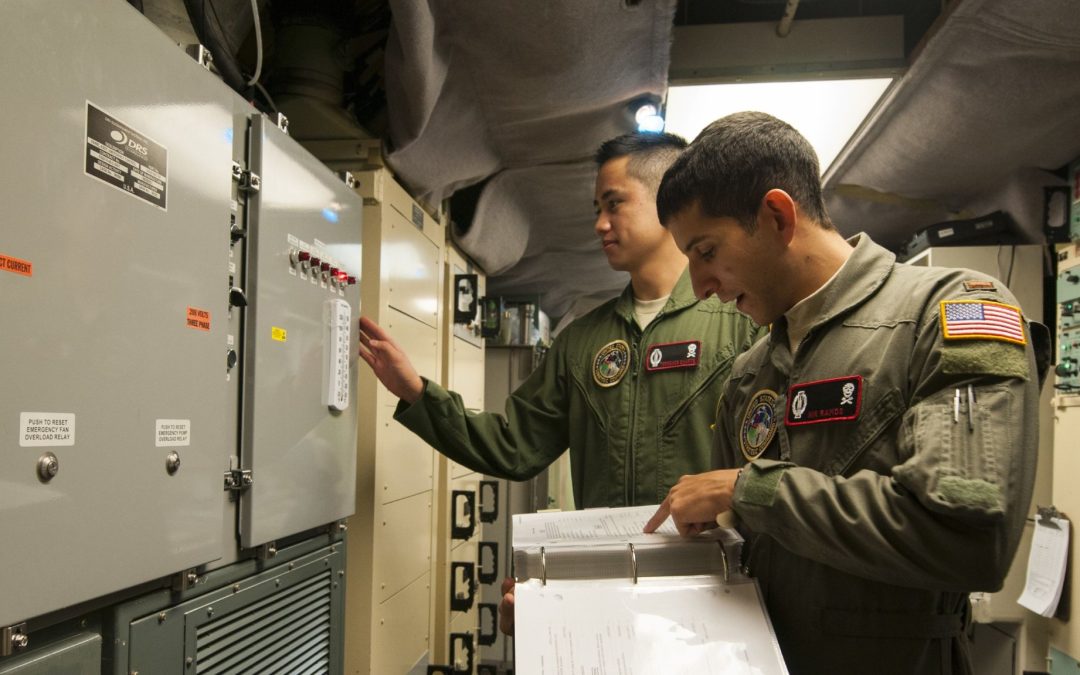
The Air Force’s Global Strike Command ordered airmen to stop using a communications test kit at one of its intercontinental ballistic missile bases after a review found potential residue of a carcinogenic chemical in it.
On Friday, Air Force Global Strike Command, which oversees the service’s ICMBs and nuclear bombers, said that it directed units to stop using AN/PRM-10 test oscillator set after polychlorinated biphenyls or PCBs were potentially found in it. The 20th Air Force, which operates F.E. Warren Air Force Base in Wyoming, is “immediately” stopping use of the tests.
The Air Force reviewed the systems after an airman at F.E. Warren Air Force Base was exposed to PCB residue while inspecting one of the kits. The airman reported the exposure and was examined for any negative health impacts; none were found. The 20th Air Force had teams review all of the communications test kits, finding potential residue on three-quarters of the inventory. Full results are pending, the Air Force said.
In the meantime, Air Force Global Strike Command said units at F.E. Warren are stopping use of the older communications test systems and switching to a modern replacement. “We remain vigilant for issues like these and will continue to aggressively and immediately take the appropriate actions,” Gen. S.L. Davis, commander of AFGSC, said in a statement.
PCBs are toxic chemicals that the Environmental Protection Agency said have “potential carcinogenic and non-carcinogenic effects.”
The effort to replace the AN/PRM-10 kits does not impact the missileers’ mission, Global Strike Command said. The Air Force is currently working to dispose of the communications test kits in use.
F.E. Warren is one of the Air Force’s two ICBM bases, alongside Minot Air Force Base in South Dakota and Malmstrom Air Force Base in Montana. Those bases have been around for decades, often still using old equipment, such as electronics that did contain PCBs. The Air Force started phasing PCBs out after they were banned in the 1970s although traces have been found throughout the subsequent years.
PCBs have been a major and recurring concern at the Air Force’s nuclear bases. There have been reported leaks and exposures of PCBS inside nuclear base launch control centers for years, Air Force documents said.
In 2023, the Air Force launched a study on cancer risks for personnel working around ICBM bases. The Air Force School of Aerospace Medicine’s findings, released earlier this year, found increased rates of Hodgkin lymphoma and testicular cancer. The study looked at potential risks around the ICBM bases, including the presence of PCBs.
The post Air Force ‘immediately’ stops use of Minuteman III communications testers after chemical exposure appeared first on Task & Purpose.
Recent Comments