
Five Salmonella outbreaks have now been tied to moringa leaf powder — one in 2015 and 2016, and four since 2025. Together they account for 219 confirmed illnesses and 59 hospitalizations, and at least eleven companies have recalled moringa or green-powder products since November 2025. The short answer to the common-source question is yes and no: the same ingredient sits under every one of them, but only twice has the government publicly named the supplier that shipped it.
What moringa is, and why people take it
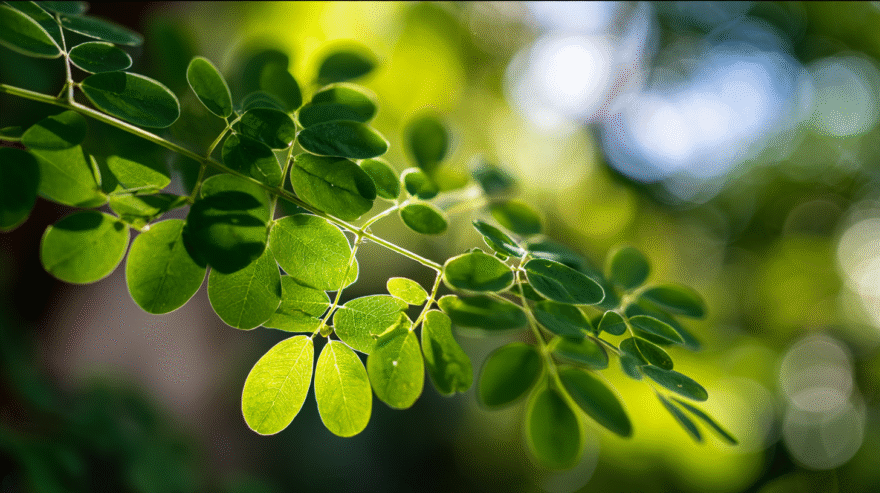
Moringa oleifera is a fast-growing tree native to the foothills of the Himalayas in northern India, now cultivated across South Asia, Africa and Latin America. Pods, seeds and leaves are all eaten, and it has served as food and traditional medicine for centuries — it is often marketed as the “miracle tree.” What sells here is the leaf: harvested, dried, milled into a fine green powder, then encapsulated or blended into “super greens” mixes, protein powders, teas and granola.
The nutritional case is real: on a dry-weight basis the leaves carry high concentrations of protein, iron, provitamin A carotenoids, B vitamins, calcium, fiber and bioactive isothiocyanates. Consumers buy it for energy, immunity, blood sugar and inflammation.
One use matters more than the rest here. Moringa is among the most widely used plant galactagogues in the world — a substance taken to increase breast milk supply. It appears in the NIH LactMed database, and a 2025 systematic review of eight randomized trials reported increased milk volume and prolactin in postpartum women. That is why moringa turns up in a lactation granola, and it is why the buyers of these products skew toward new mothers, nursing infants downstream of them, and people already managing a health problem — the groups Salmonella hurts most.
The May 2026 investigation makes that concrete. One woman took moringa capsules while breastfeeding. Her infant was sick with the outbreak strain.
The outbreak record
| Investigation | Serotype(s) | Products | Sick / states / hosp. | Source finding |
| December 2015 (closed April 21, 2016) | Virchow | Garden of Life RAW Meal Organic Shake & Meal products | 33 / 23 / 6 | Outbreak strain confirmed in the organic moringa leaf powder ingredient, traced to an exporter in South Africa; exporter placed on Import Alert 99-19 |
| October 2025 (closed Dec. 4, 2025) | Richmond | Member’s Mark Super Greens; Food To Live moringa and supergreens; Africa Imports moringa | 11 / 7 / 3 | Traceback converged on a single lot from Vallon Farmdirect PVT LTD, Jodhpur, India |
| January 2026 (closed July 22, 2026) | Typhimurium, Newport, Richmond | Live it Up Super Greens; Why Not Natural; TNVitamins and Doctor’s Pride | 131 / 38 / 36 | Common manufacturer identified; powder imported from India; supplier not named |
| February 2026 (closed April 1, 2026) | Newport and Kentucky, extensively drug-resistant (NDM-1) | Rosabella capsules (Ambrosia Brands, LLC) | 10 / 8 / 3 | Source of contamination not determined; a single supplier identified but not named |
| May 2026 (closed July 17, 2026) | Typhimurium | MOGO Pure Moringa Oleifera capsules | 34 / 14 / 11 | All moringa sourced from India through two small farms; majority of cases traced to a single redacted supplier |
Sources: CDC and FDA outbreak investigation pages, 2016 and 2025–2026.
Only the two oldest investigations produced a clean answer. In 2016, FDA sampling confirmed the outbreak strain in the organic moringa leaf powder used in RAW Meal, traced it to an exporter in South Africa, detained an incoming shipment, and on March 16, 2016 placed that exporter on Import Alert 99-19. In October 2025, FDA reported that traceback records for all eight points of sale converged on a direct importer sourcing from Vallon Farmdirect PVT LTD of Jodhpur, India, and that one lot — batch VFD/ORG/MORP/L/24 — could explain every illness in the traceback.
The three 2026 investigations did not. In the January 2026 outbreak, the largest at 131 sick across 38 states over ten months, FDA found a common manufacturer behind both Live it Up and Why Not Natural, said the powder came from India, and increased import screening — but never named the manufacturer or the supplier. In the February 2026 Rosabella outbreak, where the strains carried an NDM-1 gene and resisted every antibiotic normally used, FDA could not determine a source of contamination, though it identified a single supplier and recalled everything made with that firm’s powder. In the May 2026 MOGO outbreak, FDA’s Executive Incident Summary says the moringa came from India through a supplier sourcing from two small farms, and that a majority of cases traced to one supplier. Redacted. FDA issued Form 483s to the domestic firm and, through its India office, to the foreign facility, citing missing records and procedures, sanitation failures, inadequate hazard controls and facility maintenance.
The recall roster
- October–November 2025: all Member’s Mark Super Greens at Sam’s Club; Africa Imports organic moringa leaf powder (Nov. 4); Food To Live moringa leaf powder and supergreens mix (Nov. 12), including 44-pound wholesale bags.
- January–February 2026: Superfoods, Inc. dba Live it Up recalls all Super Greens powder (Jan. 15, expanded Jan. 20 and 26); Art Monkey LLC dba Why Not Natural (Jan. 28); Ambrosia Brands, LLC recalls 52 lots of Rosabella capsules (Feb. 13).
- May–June 2026: MOGO Moringa LLC (May 25); Total Nutrition Inc. recalls TNVitamins and Doctor’s Pride capsules May 26, then expands three more times — June 2, June 11 and June 26.
- August–September 2026, after both outbreaks closed: Lexunder Inc. dba Food To Live recalls nine green powder lines (Aug. 7), including bulk cases of 33, 44 and 55 pounds sold to businesses; Hampton Grocers recalls Lacnola Lactation Granola, marketed to nursing mothers (Aug. 14); Foods Alive Inc. recalls moringa leaf powder (Sept. 4).
Why moringa keeps getting contaminated
Moringa leaf powder is not a manufactured food that went wrong in a plant. It is a raw agricultural commodity that is dried and ground, and every step before the grinder is exposed — growing, harvesting, washing, drying, milling and packing. Irrigation water, soil amendments, animals and birds with access to fields and drying areas, and the hands that turn the leaves are all routes in.
Drying is the pressure point. Leaves are commonly dried in open air, in the sun or in shade, and a published qualitative risk assessment of moringa leaf powder found that room-dried samples carried higher viable cell and coliform counts than solar- or mechanically dried samples, because slow drying in humid conditions lets organisms multiply.
None of this is unique to moringa. Dried botanicals are a documented Salmonella reservoir. FDA’s risk profile on spices found that 6.6 percent of imported spice shipments tested positive for Salmonella over fiscal years 2007 through 2009 — roughly twice the rate for all other imported FDA-regulated foods — and that 37 of 79 source countries had contaminated shipments. Salmonella survives more than a year in low-moisture foods.
What makes moringa worse than a spice is how it is eaten and how it moves. Nobody cooks it. The powder is ready to eat, stirred into a cold smoothie, with no kill step between the field and the glass — while responsible spice handlers apply a pathogen-reduction treatment before retail sale. Servings are scoops, not a pinch. Shelf life runs two to three years, so recalled product sits in kitchens long after an investigation closes. And it is a blending ingredient sold in bulk sacks, so one contaminated lot is milled into a dozen other companies’ products under a dozen other labels. That is how one bag pulled off a store shelf becomes three recalls in five weeks.
Is there a common source, or five separate problems?
At the commodity level the answer is plain: the vehicle in all five outbreaks was dried moringa leaf powder. The country is not the common thread. India is documented as the origin in three of the five, the 2016 outbreak traced to South Africa, and the origin in the Rosabella outbreak was never made public.
At the company level the public record does not answer the question, and one company is probably not the answer. Five investigations produced five different serotype pictures — Virchow; Richmond; Typhimurium, Newport and Richmond together; drug-resistant Newport and Kentucky; and Typhimurium again. That is not one bad lot moving through the market. Different strains surfacing over a decade, in different brands, through different importers, is the signature of a commodity contaminated at origin repeatedly.
Four things that would fix this
- Name the ingredient supplier in the downstream recall notice. When a company recalls because someone else’s ingredient tested positive, every other buyer of that ingredient should be able to check their own lots that day.
- Publish the ingredient customer list. FDA has the traceback authority and the supplier has the invoices. If bulk cases went to fifteen manufacturers, name all fifteen, and make any that have not recalled explain why.
- Give purchasers direct notice. These products sold through company websites and online marketplaces, and every buyer has an email address on file. “Return it to the place of purchase” is a refund policy, not a warning.
- Require a validated kill step for ready-to-eat botanical powders, and use the enforcement tool that already exists. FDA put a moringa exporter on Import Alert 99-19 in 2016 on exactly this evidence. Ten years and 186 more illnesses later, the response was increased screening.
About Salmonella and Marler Clark
Salmonella is a leading cause of foodborne hospitalizations and deaths in the United States. Most people recover within a week, but some develop reactive arthritis, irritable bowel syndrome or bloodstream infections that last a lifetime. Children under five, adults over 65 and people with weakened immune systems face the highest risk.
Marler Clark, The Food Safety Law Firm, is the nation’s leading law firm representing victims of Salmonella outbreaks, and represents people sickened in the moringa leaf powder outbreak. Our lawyers have represented thousands of people in Salmonella outbreaks tied to peanut butter, eggs, chicken, cantaloupe, sprouts, papayas, onions, flour and dietary supplements, and have recovered over $850 million for clients. If you or a family member became ill after consuming a recalled moringa product, you can contact the firm for a free case evaluation.
Sources and further reading
CDC: Salmonella Virchow linked to Garden of Life RAW Meal (2015–2016)
Clinical Infectious Diseases: the 2015–2016 Virchow outbreak investigation
FDA: Moringa Leaf Powder outbreak investigation (October 2025)
FDA: Moringa Leaf Powder outbreak investigation (January 2026)
FDA: Extensively Drug-Resistant Salmonella — Moringa Powder (February 2026)
FDA: Executive Incident Summary, MOGO moringa capsules
FDA: Risk Profile on Pathogens and Filth in Spices
Journal of Food Protection: Qualitative microbiological risk assessment of moringa leaf powder
FDA recall: Foods Alive organic moringa leaf powder (Sept. 4, 2026)
Food Poison Journal: Still Nobody Will Name the Supplier (Sept. 5, 2026)
Recent Comments