
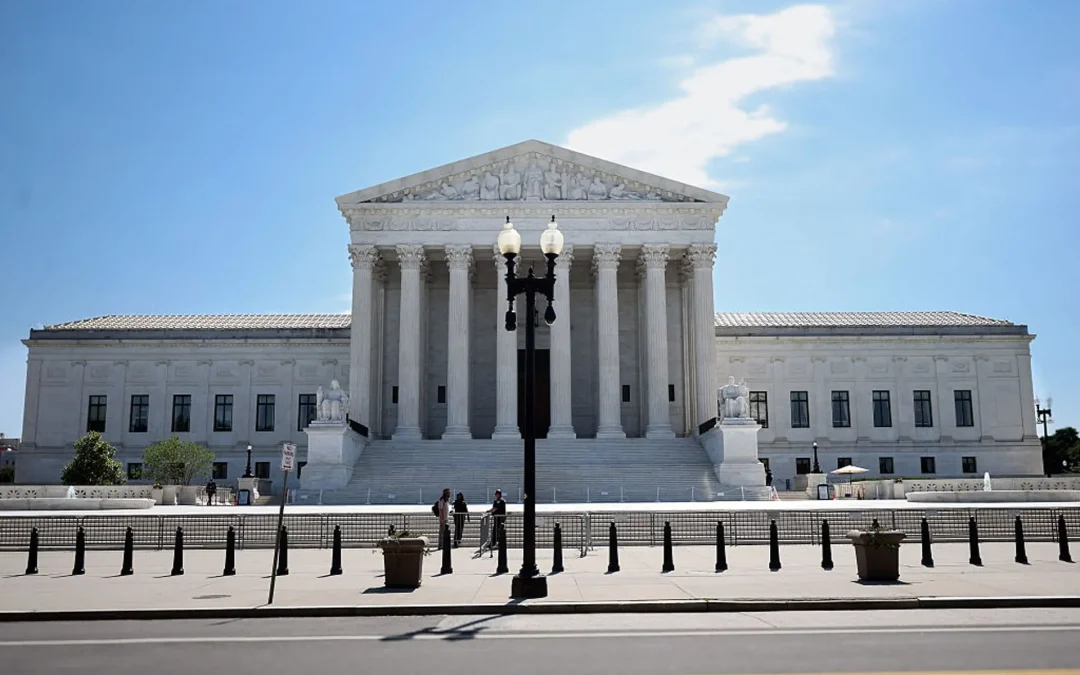
The Supreme Court on Friday dismissed a case that had been scheduled for argument in October after U.S. Solicitor General D. John Sauer notified the court that the case is now moot and the challenger agreed that it should be removed from the oral argument docket.
In Genalo v. Black, the justices had been set to consider at what point, if any, certain noncitizens have a right to a bond hearing during a lengthy detention and what the government must show to justify continued detention if such a hearing is indeed required. In his letter to Scott Harris, the clerk of the court, Sauer said the Justice Department aims to bring the issue back to court soon in a new petition for review.
When Sauer asked the court to take up Genalo v. Black, the case involved two men detained under Section 1226(c) of the Immigration and Nationality Act, which requires the detention of noncitizens, including green card holders, who have committed certain crimes and who are awaiting removal proceedings. Highlighting that Section 1226(c) “expressly prohibits” the release of such individuals “except on ‘narrow, witness-protection’ grounds,” Sauer urged the justices to review the U.S. Court of Appeals for the 2nd Circuit’s decision that the men’s detention had stretched on for so long that they were entitled to a bond hearing under the Fifth Amendment’s due process clause.
Sauer pointed to Jennings v. Rodriguez, in which the Supreme Court held in 2018 that Section 1226(c) itself did not require periodic bond hearings and considered – but did not resolve – the question of whether, amid a lengthy detention, due process would eventually require such hearings. Sauer urged the court to grant review in Genalo v. Black and answer that lingering question.
While the federal government’s petition for review was pending, one of the men involved, Carol Williams Black, left the United States and filed a declaration with the court stating that he had no intention of returning. The parties agreed that his claim was moot. When the court granted the petition on June 15, it clarified that the case would focus only on the other man, who is identified as Keisy G.M. and had been detained by immigration officials for 21 months after being convicted of assault. However, the court acknowledged that questions remained about whether the case still presented a live controversy, asking the litigants to brief whether G.M.’s claim was also moot (as his lawyers had asserted in his brief opposing review).
At that point in the case, the mootness question stemmed from the fact that G.M. had been released from custody in 2022. But in late August, the question took on new significance, when New York Gov. Kathy Hochul granted G.M. a pardon with respect to his assault conviction. “As a result, G.M. is no longer deportable” and no longer “subject to mandatory detention under” Section 1226(c), ACLU National Legal Director Cecillia Wang wrote in G.M.’s merits-stage brief, urging the court to determine that the case was moot.
In his Friday letter to the court, Sauer also pointed to the pardon, explaining that the government “agrees with G.M. that his habeas case is now moot.” Sauer and Wang filed a joint stipulation to dismiss on Friday, as well.
Later on Friday, the court dismissed the case, which had been scheduled for argument on Tuesday, Oct. 13. The dismissal leaves only one argument currently scheduled for that day and only six total arguments in the October sitting.
Recent Comments