
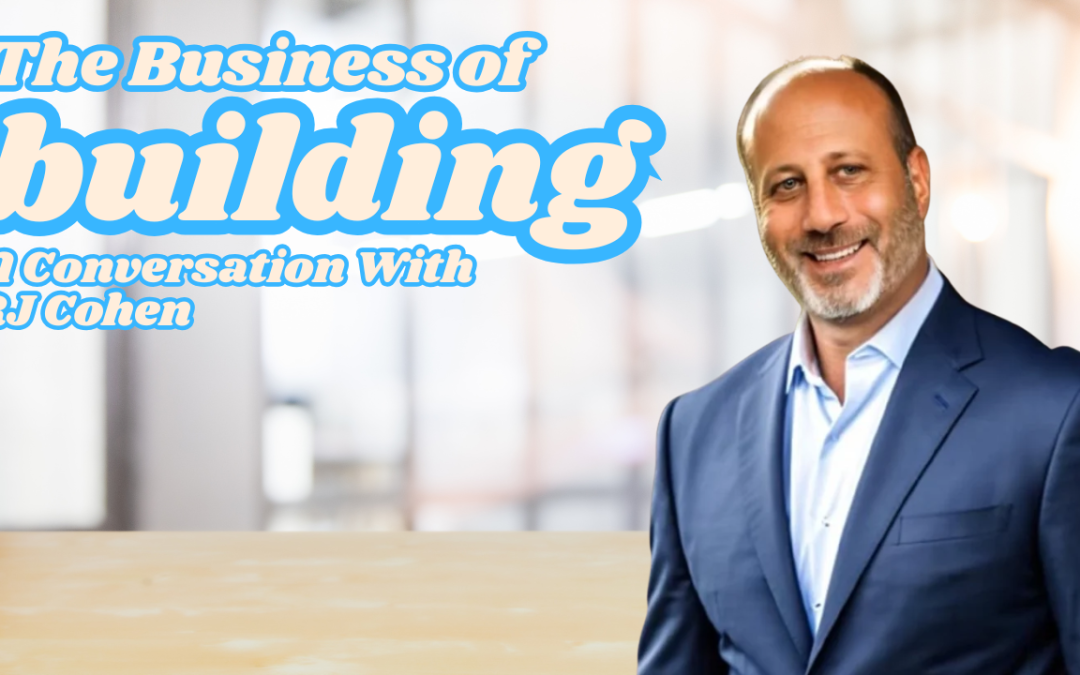
Building a law firm requires more than legal skill. It takes a clear point of view about clients, people, culture and growth, along with the patience to keep making thoughtful decisions long before the results are visible.
RJ Cohen knows that process well. As Chairman and Chief Development Officer of Cohen Cunningham DeRose Higgins Lyon, he is helping to build a multistate defense firm designed around experienced lawyers, direct senior attention and coordinated service. This is also not his first experience growing a law firm. Earlier in his career, he created and helped grow a firm from a handful of lawyers into an organization with hundreds of attorneys and nearly 1000 people total over his two decades as its Managing Partner.
I spoke with RJ about why he decided to build a firm again, what he learned the first time and how Cohen Cunningham is approaching growth, recruiting, culture and client service.
You have already helped build one law firm from a handful of lawyers into a much larger organization. Why did you decide to do it again?
I’m a builder. It’s a passion. I enjoyed the process of building something with other people, and while I ultimately burned out from being “on call” every second of every day for more than 20 years, a bunch of my buddies came to me in 2024 to do it again and I missed the emotional investment. I wanted to work with my friends to help create something special. A law firm is never created by one person. It grows because talented lawyers and professionals believe in what they are building together and see an opportunity to contribute to it. I couldn’t resist the temptation to work with this group of talented people again.
When we formed Cohen Cunningham, we had the benefit of experience. Our nine owners and three C-suite administrators came from a dozen different large, multistate law firms between us. Every one of us had seen what helps a firm grow, what clients value, and what lawyers need to do their best work. We also understood the parts of law firm life that can become unnecessarily complicated as an organization gets larger. All of those experiences gave us an opportunity to be intentional from the beginning and to create a firm that combines sophisticated work with direct relationships, practical decision making and a strong sense of connection.
What lessons from building your first firm have been most valuable this time?
One of the biggest lessons is that growth needs a reason behind it. I believe in “right time, right reason, right people.” It is one of my favorite mantras. Adding lawyers, offices or practices can create momentum, but those additions need to make sense for clients and also for the people already at the firm. The right growth expands what we can do, strengthens our geographic reach and creates opportunities for our lawyers without changing the qualities that made people want to join us.
I also learned how important communication is. People want to understand where the firm is going, how decisions are made and where they fit into the larger picture. Leaders need to communicate that consistently, especially during periods of rapid growth.
Cohen Cunningham is a relatively new firm, but its lawyers bring substantial experience from larger organizations. How does that shape the firm?
We are new as a firm, but we are not new to the work. Our lawyers have handled sophisticated matters, worked with significant clients and practiced in demanding environments. We are applying all that experience to a firm with a much more connected structure and a strong emphasis on responsiveness and senior involvement.
That distinction matters to clients. They want experienced lawyers who understand the legal issues, but they also want counsel who understand the business and operational considerations behind those issues. They want clear communication, sound judgment and a team that can make decisions efficiently and proactively. We built the firm with those expectations in mind.
The firm has discussed significant growth over the next several years. What does responsible growth look like to you?
Responsible growth means expanding in ways that make the firm stronger without losing the qualities that distinguish it. We are interested in talented lawyers, complementary practices and geographic opportunities that help us serve clients more effectively across New York, New Jersey, Connecticut, Pennsylvania, Florida, and, in time, beyond.
We also want growth to feel cohesive. A client working with lawyers in more than one office needs to experience one firm, not a collection of separate locations. That requires shared standards, strong internal relationships and consistent communication. We are building those habits now so they remain part of the firm as we expand. All of that is very intentional. We all came from big firms. We want big firm energy, but small firm synergy. We demand nothing less.
How do you preserve direct partner attention as a firm becomes larger?
You make it an operating priority. Senior attention cannot exist only in marketing language. Clients need to see it in how matters are staffed, how quickly questions are answered and how involved experienced lawyers remain in strategy and decision making.
Growth gives us the ability to offer clients greater depth and broader capabilities. At the same time, we want clients to continue to know who is responsible for their matters and to have direct access to the lawyers guiding the work. Preserving that accountability is central to the kind of firm we are building. We won’t compromise on it.
What are clients asking for from their outside counsel today?
Clients want excellent legal work, but they also expect their lawyers to understand the environment in which they operate. They value predictability, responsiveness and practical advice. They want counsel who can identify the central issue, explain the available options and help them make a decision without adding unnecessary complexity. They want efficiency, proaction, and stellar communication.
For clients managing matters across jurisdictions, consistency also matters. They want confidence that the same standards will apply across offices and teams. That is one reason our connected multistate model is important. It allows us to coordinate the work while keeping experienced lawyers close to the client and the matter.
What makes a lateral lawyer a strong fit for Cohen Cunningham?
Experience and ability are essential, but fit involves more than a résumé. We are looking for lawyers who want to help build, who value collaboration and who are comfortable taking an active role in the life of the firm. At a growing firm, people have an opportunity to influence practices, client relationships, recruiting and culture. That is especially appealing to lawyers who have ideas and want the ability to act on them.
We also want people who care about how clients experience the firm and how colleagues experience working together. Growth is much more sustainable when people share those values. As important as the quality of the lawyer is, the quality of the person and teammate is even more important. I know that “synergy” is an overused word, but it is a core philosophy of ours, and you need an incredibly strong internal culture to achieve it. That’s why we have not just one but two Chief Culture Officers at this firm; it is that important.
What can a growing firm offer that a more established organization may not?
A growing firm can give people meaningful influence. Lawyers can help shape a practice, participate in strategic decisions, mentor others and take on leadership opportunities earlier. There is room to create something, not only inherit a structure someone else designed.
There can also be a closer connection between an individual lawyer’s work and the firm’s progress. When someone develops a client relationship, recruits a talented colleague or introduces an idea that improves how we operate, the effect is visible. That sense of ownership is incredibly important to us. We aren’t looking for people who just want to have a good job. We want everyone to feel invested in our success, because every single person contributes to it.
How do culture and recruiting affect each other?
They are inseparable. Candidates pay attention to what a firm says about its culture, but they make decisions based on what they experience. They notice how colleagues interact, whether leaders are accessible, how decisions are communicated and whether people have a genuine opportunity to contribute.
Recruiting therefore begins long before an interview. It is reflected in how we run the firm every day. When the culture is healthy and the firm’s direction is clear, our lawyers become its most credible ambassadors.
You have a large professional network and a visible personal brand. How are you using those assets to help build the broader firm?
Relationships have always been a major part of how I have built businesses. Relationships aren’t transactional to me, and I learned through three decades of experience that not everyone feels that way. But I do. A network becomes especially valuable when it creates opportunities for other people. I can use my relationships and visibility to introduce the market to our lawyers, highlight their experience and help them build relationships of their own.
The long-term strength of Cohen Cunningham will come from the visibility and relationships of many lawyers across the firm. Part of my role is to help create that platform and encourage others to use it.
What role does business development play in the growth of the firm?
Business development is part of serving clients well. It begins with understanding what clients need, staying connected to them and identifying ways the firm can be more useful. It also includes building personal relationships before business relationships. I guess that goes back to my distaste for people who are just transactional.
We want our lawyers to feel comfortable participating in the business development process, but it doesn’t come naturally to everyone. And “bringing in business” is not the “be all, end all” either. Contributions to a firm’s success comes in a variety of shapes and sizes. Business development itself can take many forms, including writing, speaking, attending industry events, introducing colleagues and keeping in touch with clients and referral sources. The approach can reflect each lawyer’s strengths, but it needs to be intentional and consistent.
What role will thought leadership and LinkedIn play in making the firm better known?
They give us a way to show how our lawyers think and what they understand about the issues clients face. Strong content is most valuable when it is useful, specific and connected to the work we do. It can help clients, referral sources and recruits become familiar with our lawyers before they ever meet them.
LinkedIn also gives us an opportunity to share the firm’s growth as it happens. We can introduce lawyers, explain our practices, highlight useful insights and show the people behind the organization. Over time, that consistent visibility helps the market understand who we are and what makes the firm different.
What have you learned about leadership during periods of change?
Leadership requires both patience and urgency. You need urgency to keep the organization moving, but patience to understand that trust, reputation and culture are built over time. People also need to see consistency between what leaders say and what they do.
I have learned to listen carefully, communicate the reason behind decisions, and stay focused on the long-term direction of the firm. There will always be adjustments along the way. The important thing is to keep learning without losing sight of what you are building. I’ve been doing this for awhile, but I still learn something new almost every day.
What advice would you give a lawyer who wants to become more entrepreneurial?
Pay attention to how the business works, not only to the legal work in front of you. Learn what clients value, how relationships develop, why people choose one firm over another and what makes talented colleagues want to stay. Ask questions and look for ways to contribute outside your immediate assignment.
Entrepreneurship also requires self-belief and patience. Most meaningful growth comes from many small actions repeated over time. Build relationships, follow through, share ideas and become known as someone who helps create opportunities for clients and colleagues.
When you look ahead, what do you want Cohen Cunningham to be known for?
I want the firm to be known for excellent lawyers who are accessible, responsive and invested in their clients. I want clients to see a connected team that understands their businesses and can handle sophisticated work across multiple jurisdictions without unnecessary layers.
I also want this to be a place where talented people can build meaningful careers, contribute ideas and grow with the organization. If we continue to make thoughtful decisions about clients, people and culture, the firm’s growth will follow from that foundation.
RJ Cohen is Chairman and Chief Development Officer of Cohen Cunningham. He works with the firm’s lawyers and leaders on growth, client development, recruiting and the continued development of its multistate platform. Connect with him on LinkedIn.
Recent Comments