
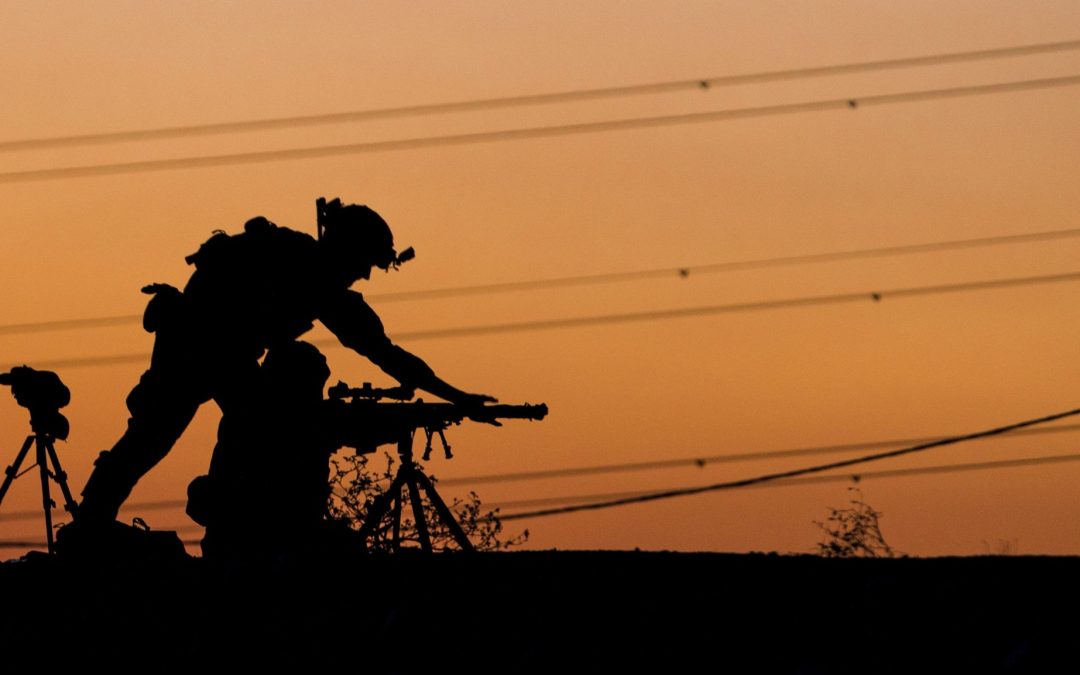
The U.S. military-led mission to counter the Islamic State in Iraq has officially come to an end.
U.S. Central Command (CENTCOM) announced Wednesday that the “orderly departure” of U.S. personnel and equipment from Erbil Air Base in northern Iraq was officially complete. Officials said the withdrawal marked the end to Operation Inherent Resolve in Iraq, the U.S. military’s counter-ISIS mission in the country.
The Erbil Air Base had served as a central hub for the Combined Joint Task Force-Operation Inherent Resolve mission since U.S. forces had been invited back by the Iraqi government to fight ISIS insurgents in the country.
The U.S. invaded Iraq in 2003 to topple Saddam Hussein, and by 2011, American forces left the country. As ISIS insurgents took hold of broad swaths of the country, Iraqi authorities invited a smaller contingent of U.S. forces to help counter the growing threat. Operation Inherent Resolve, a U.S.-led international coalition of military partners, was then established in 2014.
A majority of the 1,500 American and coalition partners supporting these operations worked out of Erbil. The mission will now be headquarters based in Jordan for U.S. forces to continue its mission focused on Syria, officials said.
“As we step back and hand full primary responsibility for Iraq’s security to the Government of Iraq and the brave people of Iraq, U.S. and Coalition forces stationed across the region will remain ready to respond to any ISIS threats that arise,” Adm. Brad Cooper, CENTCOM’s commander, said in a release. “Maintaining our vigilance and readiness is essential to protecting the U.S. homeland and strengthening regional security.”
Top Stories This Week
For more than a decade, U.S. troops have trained and assisted Iraqi partner forces to fight ISIS in Iraq and Syria. In 2024, the U.S. and Iraq reached an agreement for a new bilateral security partnership, which ended the coalition’s work in the country and moved the U.S. towards more of an “advisory” and “capacity-building” role for Iraqi security forces.
“ISIS no longer poses a systemic threat to Iraq’s national security and Iraqi security forces, including the Peshmerga and other Iraqi Kurdistan Region security forces, now possess the capacity, leadership, and operational independence to unilaterally manage threats to their homeland,” Cooper said.
When the new security partnership with Iraq was announced in 2024, U.S. officials would not say how many of the roughly 2,500 troops in Iraq would ultimately withdraw or stay behind. Department of Defense officials said in a release Wednesday that local security forces would lead counter-ISIS efforts in the country but that the U.S. would continue providing “targeted training and intelligence support to our Iraqi partners.”
In response to inquiries about how many American troops would be in Iraq going forward, a U.S. official declined to comment, citing operational security.
The withdrawal comes as the U.S. war with Iran enters its eighth month. The U.S. withdrawal prompted mixed feelings among Iraqis about the departure of American forces in the country after decades of war, and concerns from Kurdish officials who worry that the removal of U.S. air defense equipment will leave the Kurdistan region vulnerable to Iranian drone and ballistic missile attacks.
The post Counter-ISIS mission in Iraq comes to an end appeared first on Task & Purpose.
Recent Comments