
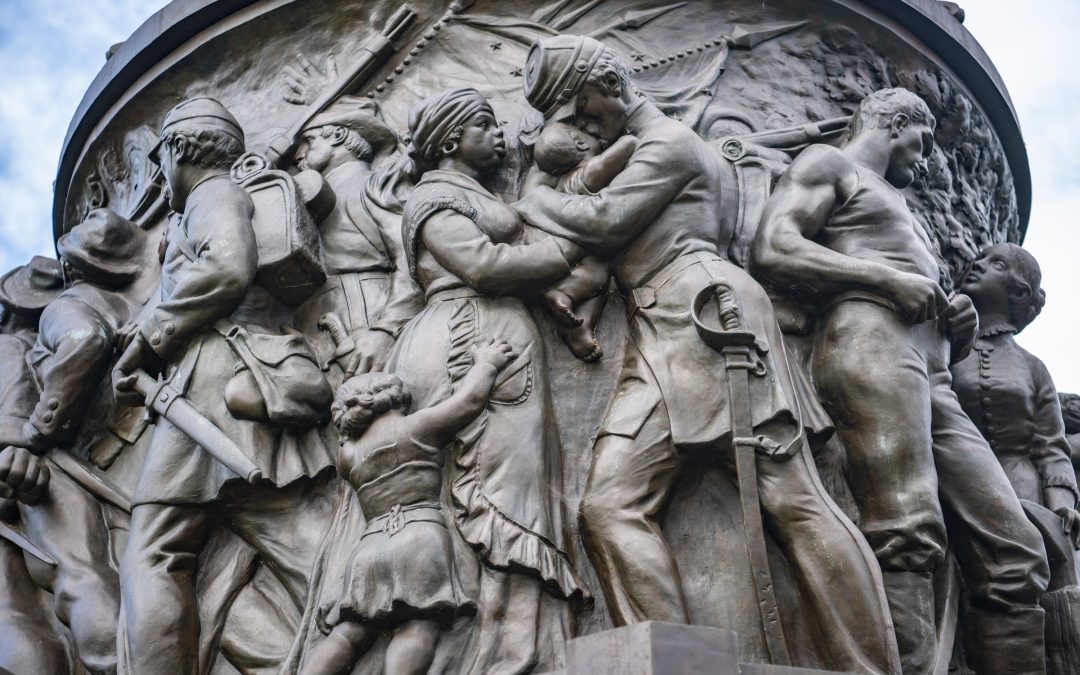
Defense Secretary Pete Hegseth directed the Army to restore a Confederate memorial at Arlington National Cemetery, a project expected to cost taxpayers approximately $9 million, cemetery officials confirmed to Task & Purpose.
“The current estimated cost of comprehensive conservation, replacement of the internal support structure and installing the Moses Ezekiel sculpture in Arlington National Cemetery is approximately $9 million in Operation and Maintenance Army (OMA) funds,” an Arlington National Cemetery spokesperson said.
Kyle Bibby, co-founder and co-CEO of the Black Veterans Project, criticized the Pentagon’s decision to spend public money restoring a monument to the Confederacy.
“Public land and public money should not memorialize men who took up arms against the United States,” Bibby, a former Marine Corps infantry officer, told Task & Purpose.
The Army expects to reinstall the sculpture in 2027 and said it will develop historical context for visitors.
Arlington officials also confirmed that the sculpture was gifted to the Shenandoah Valley Battlefields Foundation, a private nonprofit, in January 2026. The Army’s existing loan agreement remained in place.
The Army plans to spend approximately $9 million in federal funds conserving, repairing, and reinstalling the sculpture, despite its private ownership.
As previously reported by Task & Purpose, the memorial was removed in December 2023, following recommendations from the Naming Commission, established by Congress under the 2021 National Defense Authorization Act. The legislation required the Pentagon to remove Confederate monuments and symbols from military property by Jan. 1, 2024.
Top Stories This Week
More than 40 Republican members of Congress opposed the removal, writing to then-Defense Secretary Lloyd Austin that the monument was intended to commemorate “reconciliation and national unity,” rather than the Confederacy.
That position found a receptive audience under Hegseth, who subsequently directed the Army to return the monument to Arlington.
“The Secretary of War under title 10, United States Code, section 113, directed the U.S. Army to coordinate with the Commonwealth of Virginia to display Moses J. Ezekiel’s sculpture at his burial site in Arlington National Cemetery,” the spokesperson said.
Originally unveiled in 1914, the memorial depicts Confederate soldiers and enslaved people along with a “mammy” figure, a long-standing racist caricature. Atop the monument stands a woman with a laurel crown in one hand.
Bibby challenged the memorial’s portrayal of enslaved Black Americans, arguing that the imagery misrepresents their relationship to the Confederacy.
“This is not about preserving history because this sanitized version of slavery is ahistorical,” he said. “Black people were not marching willingly in arms alongside the men who enslaved them, erased their lineage, sold their children away, and answered the Civil War with a century of Jim Crow and racial terror.”
Ezekiel’s devotion to the Confederacy extended well beyond his military service. A former Virginia Military Institute cadet who fought for the Confederacy as a teenager, he spent much of his adult life living in Rome, where he continued celebrating the Confederate cause decades after the Civil War ended.
According to research by art historian Samantha Baskind, Ezekiel displayed a Confederate flag in his Rome studio for roughly 40 years, signed letters affirming his loyalty to the Confederate cause and enthusiastically produced monuments honoring Confederate military leaders.
In his memoir, he maintained that he had fought not for slavery but for “states’ rights and for free trade,” despite slavery’s central role in the Confederacy’s formation.
The decision to restore Ezekiel’s monument follows a sweeping effort under Hegseth to reverse the military’s removal of Confederate-associated names and symbols.
At the time of the memorial’s removal, the Defense Department was also renaming military installations, streets and buildings that honored Confederate leaders. Fort Benning, Georgia, became Fort Moore, while Fort Bragg, North Carolina, became Fort Liberty.
Hegseth reversed both changes in 2025, using a workaround that restored the installations’ original Confederate-era names without formally honoring the Confederate generals for whom they had been named. Instead, the Pentagon rededicated Fort Benning, Georgia, to a World War I soldier and Fort Bragg, North Carolina, to a World War II soldier who happened to share the same surnames as the Confederate generals.
This isn’t the first controversial topic the Army-funded Arlington National Cemetery has found itself in under Hegseth’s Defense Department.
In March 2025, Task & Purpose reported that the cemetery had removed public-facing links to dozens of educational resources and lists of notable graves highlighting Black, Hispanic and female service members. The changes also affected materials about Medal of Honor recipients, the Civil War and the history of formerly enslaved people buried at Arlington.
Cemetery officials confirmed at the time that the materials had been “unpublished” to comply with executive orders targeting diversity, equity and inclusion programs.
Task & Purpose asked the Pentagon whether it had consulted service members or assessed how restoring the Confederate memorial could affect military morale and unit cohesion. The Pentagon did not answer, instead referring the questions to the Army and Arlington National Cemetery.
The Army, however, had already directed those questions to Hegseth’s office, which it identified as responsible for the restoration.
“I would still stand by OSW having the ultimate lead, as this was directed by their office,” an Army public affairs official told Task & Purpose.
The Army subsequently confirmed that it had not solicited feedback from service members about the restoration’s potential impact on morale and unit cohesion.
Bibby said he understood why the Army had not sought service member feedback, citing unexpected combat deployments to the Middle East and more pressing concerns facing troops.
“I believe this isn’t a priority for most service members,” he said.
But Bibby drew a distinction between the demands facing service members and the priorities of Pentagon leadership, which he accused of failing to consider whom the military should honor.
“Unfortunately, this decision is consistent with Pentagon leadership that has made clear it prefers racist mythology to the harder work of building a genuinely unified military,” he said.
UPDATE: 10.20.2026; This article was updated after publication with additional photos of the Confederate Memorial and to clarify Task & Purpose’s questions to the Army and the service’s response.
The post Hegseth’s plan to restore Confederate memorial at Arlington expected to cost taxpayers $9 million appeared first on Task & Purpose.
Recent Comments