
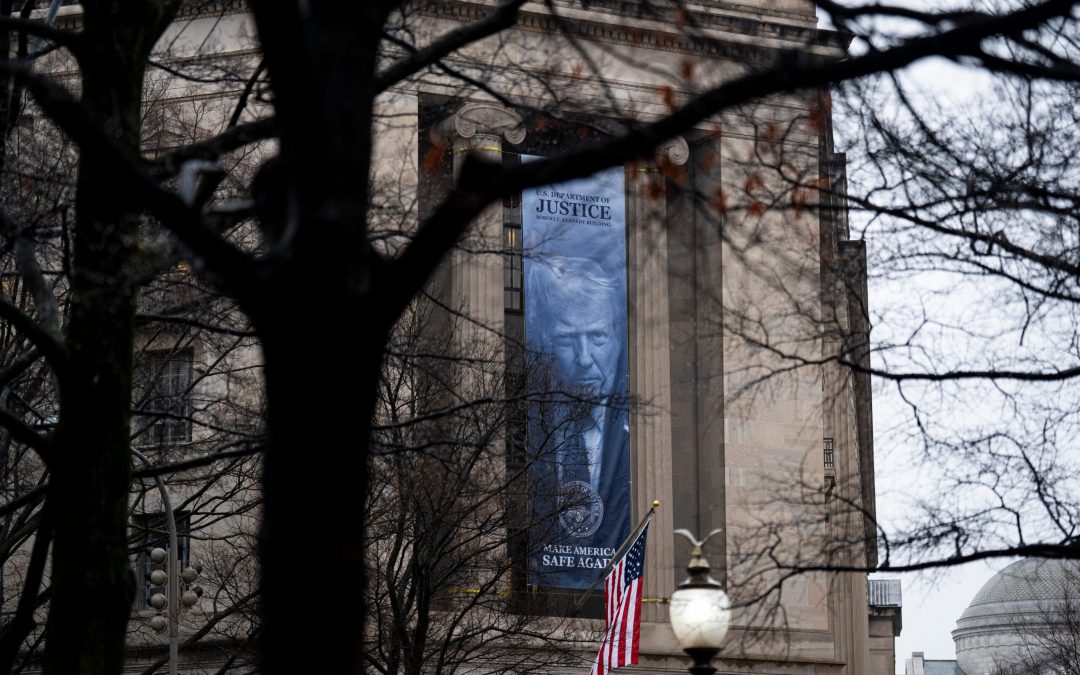
It’s been a rough couple of years at the Justice Department. On her first day in office, then-Attorney General Pam Bondi made declining to sign a brief a fireable offense. Later, rather than stop asking her lawyers to do things that could get them disciplined, she tried to take over bar discipline herself. The Office of Immigration Litigation, which had more than 300 attorneys when Trump took office, has lost at least 100 of them. The department is recruiting prosecutors over Twitter. And judges across the country have all but declared the presumption of regularity dead on arrival.
The rot set in early. Back in April 2025, Erez Reuveni, then acting deputy director of the Office of Immigration Litigation, told U.S. District Judge Paula Xinis that Kilmar Abrego Garcia should not have been removed, and added: “I am also frustrated that I also have no answers for you on a lot of these questions.” He was placed on leave the next day and fired within the week, with Bondi explaining that every DOJ attorney is required to zealously advocate. He later alleged in a whistleblower complaint that then–Principal Associate Deputy Attorney General Emil Bove floated telling the courts “fuck you” and ignoring any order that got in the way of the deportation flights.
That’s the view from the outside: the filings, the whistleblower complaints, the exit numbers. Bloomberg Law’s UnCommon Law podcast has someone who lived through it.
Sarah Wilson, the former Acting Deputy Assistant Attorney General overseeing DOJ’s Office of Immigration Litigation and now a partner at Colombo & Hurd, spent 14 years defending immigration policy for Democratic and Republican administrations alike. She tells host Matthew S. Schwartz that within weeks of Donald Trump’s return to the White House, the job changed, and that Reuveni’s firing was when the office knew it:
I think that was maybe the first moment at our office where we realized that something really different was going on here. Prior to this administration, people were wrongfully removed. Contrary to court order, there was a standard protocol within our office for how you might go about addressing that issue, how you would alert the court and just the tone that you would take in those filings, which would generally be fairly contrite.
We approached this case like we had hundreds of other wrongful removal cases in the past and marched into court and said all the same things that we would have said under other circumstances. And the reaction to that resulted in a firestorm.
Owning up to a judge after deporting someone in violation of her order used to be standard operating procedure. Under this DOJ, it got you fired.
It didn’t stop there. According to Wilson, in some of the highest-profile cases, career lawyers were told they could no longer advise the agencies they represented on how to comply with court orders. Those calls would be made further up the chain.
For those who don’t practice in the federal government, telling your client how to comply with a court order is… kind of the whole job. Reuveni’s complaint was explicit that the department “consistently advises its clients of their obligation to follow court orders, not to ignore them.” That was the baseline. Now the lawyer who has to stand in front of the judge and answer for whether the government complied has been walled off from the conversation about whether it will comply.
Wilson describes what that did to the people still in the building:
It was a scary time. It was a scary time to be at the department.
People started to wonder, can I do this without having someone be upset with me? Can I actually direct that this person be released? Or is there going to be a higher level call? Am I going to be called to explain why it is we complied with this order so quickly?
There’s a lot of that that I still wonder about today. There’s several things that happened that I thought like, why didn’t I just walk out the door then? Why wasn’t that a clear enough sign that I didn’t need to be here anymore?
Wilson describes the decision to leave the DOJ as “heartbreaking,” and emphasizes the importance of getting the DOJ back to how it operated under every other administration. But is that even possible? Wilson says, “that’s going to take a long time to undo. It feels like it’s going to take generations.”
It’s chilling stuff from inside the DOJ. You can listen to the full episode below.
Kathryn Rubino is a Senior Editor at Above the Law, host of The Jabot podcast, and co-host of Thinking Like A Lawyer. AtL tipsters are the best, so please connect with her. Feel free to email her with any tips, questions, or comments and follow her on Twitter @Kathryn1 or Bluesky @Kathryn1
The post Inside Trump’s DOJ, The Scary Part Was Following Court Orders Too Fast appeared first on Above the Law.
Recent Comments