
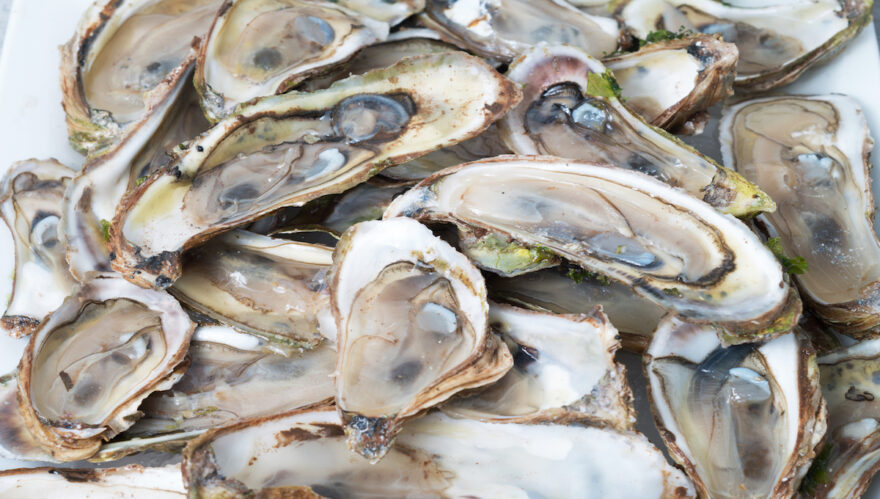
The Virginia Department of Health (VDH) reports that all eight oyster meat samples collected from Little Wicomico Oyster Company (LWOC) cages on the Little Wicomico River on October 13 tested positive for Salmonella. Whole genome sequencing results, which will show whether the oyster isolates match the outbreak strain, are expected next week.
The oysters are linked to a multistate outbreak of Salmonella Telelkebir, a rare serotype. The CDC is focusing on a genomic subcluster of 27 people in 12 states whose infections are highly genetically related. Five of the 21 people with information available (24%) have been hospitalized; no deaths have been reported. Illnesses began between May 29 and September 14, 2026. The ill range in age from 1 to 86 (median 41), and 59% are male. By state, the ill live in Pennsylvania (8), New York (4), Virginia (3), Colorado (2), Indiana (2), Maryland (2), and Connecticut, Florida, Illinois, Iowa, Kentucky and New Jersey (1 each). VDH notes that CDC is also looking at additional Telelkebir cases outside the 27-person subcluster to determine their source. As we reported last week, VDH’s October 21 update put the broader Telelkebir investigation at 55 cases in 19 states, up from 53 cases in 18 states on October 14, with the most recent illness beginning October 6. VDH’s current page no longer gives a number for the broader group.
CDC cautions that the true number of sick people is likely much higher than reported, because many people recover without medical care and are never tested, and that recent illnesses may not yet be counted because it usually takes three to four weeks to link a case to an outbreak.
The Investigation
Pennsylvania health and agriculture officials first identified the outbreak. According to CDC, 10 of 13 people interviewed (77%) reported eating raw oysters, significantly higher than the 1.6% of respondents who reported eating raw oysters in CDC’s FoodNet Population Survey. Shellfish tag and traceback information is available for seven of those 10. Two were single-source cases tied to the Little Wicomico River. The other five ate oysters from multiple sources, including Virginia, New Jersey, Massachusetts and Georgia/Canada, but the Little Wicomico River oysters harvested by LWOC were the only oysters in common to all seven.
Pennsylvania officials also sampled raw oysters from a distributor that supplied restaurants where ill people ate. One LWOC sample from the Little Wicomico River tested positive for Salmonella, with WGS pending. WGS of the 27 patient isolates did not predict resistance to any antibiotics.
CDC’s onset data show that most illnesses clustered in mid-summer: 13 began in July and 8 in August, with single cases in late May and late June and four more in early-to-mid September. Twenty-one of the 27 illnesses began between July 6 and August 23.
The timing raises questions about the scope of the recall. All 27 illnesses in CDC’s subcluster began between May 29 and September 14, before the recall’s harvest window opens on September 18. VDH’s broader count, however, includes an illness that began October 6, inside the recall window. The recall reaches oysters harvested this fall, but most of the people known to be sick fell ill months earlier.
This is also not the first time this rare serotype has turned up in raw oysters. Last December, CDC reported a separate multistate Salmonella Telelkebir outbreak linked to raw oysters that sickened 64 people in 22 states; the source of those oysters was never publicly identified. (More on that history here.)
VDH’s actions to date:
On October 9, VDH issued an emergency closure of the Little Wicomico River in Northumberland County to oyster and clam harvesting, on FDA’s recommendation, and worked with LWOC on a recall. On October 13, VDH’s Division of Shellfish Safety and Waterborne Hazards collected 400 LWOC oysters and submitted eight meat samples for testing — all eight positive. A second round of 400 oysters (eight more samples) was collected October 21, and samples to test for fecal contamination were collected October 22.
Reopening the growing area will require three consecutive rounds of negative product testing. The initial emergency closure runs 30 days. VDH says LWOC remains a certified shellfish dealer and that, to its knowledge, routine or follow-up inspections have not identified deficiencies establishing a link between LWOC’s operations and the illnesses.
What Was Recalled
Shellstock (whole, in-shell) oysters harvested by Little Wicomico Oyster Company (VA-1421-SP) from the Little Wicomico River or Little Wicomico River Lower, Virginia, from September 18 through October 8, 2026. VDH lists distribution to CO, CT, DC, FL, GA, IL, MD, MO, NC, NJ, NV, NY, PA, VA and TX; the FDA adds California and warns the oysters may have been further distributed. Oysters from other Virginia growing areas are not part of the recall.
Consumers should not eat recalled oysters and should throw them away or return them. Restaurants and retailers should not sell or serve them, should check shellstock tags for harvest area and date, and should throw the product away or contact their distributor to arrange for destruction. FDA notes that food contaminated with Salmonella may look, smell and taste normal. Anyone who ate raw oysters and developed diarrhea, fever and stomach cramps — symptoms typically begin six hours to six days after exposure — should contact a healthcare provider, especially with high fever, bloody diarrhea, diarrhea lasting more than two days, or signs of dehydration.
Frequently Asked Questions
What is Salmonella Telelkebir?
It is a rare serotype of Salmonella bacteria that causes salmonellosis, a gastrointestinal infection. Whole genome sequencing showed the 27 patient isolates in this outbreak are closely related genetically, meaning the illnesses likely share a common source.
How many people are sick?
It depends on which count you use. CDC reports 27 people in 12 states, with five hospitalizations and no deaths, as of October 19; those are the cases whose bacteria are most closely related genetically. VDH’s count of the broader Telelkebir investigation reached 55 people in 19 states as of October 21, and those additional cases are still being investigated to determine their source. Both numbers are almost certainly undercounts.
Which oysters were recalled?
Whole, in-shell (shellstock) oysters harvested by Little Wicomico Oyster Company (VA-1421-SP) from the Little Wicomico River or Little Wicomico River Lower, Virginia, from September 18 through October 8, 2026. They went to restaurants and retailers in CA, CO, CT, DC, FL, GA, IL, MD, MO, NC, NJ, NV, NY, PA, TX and VA, and may have been further distributed.
How do I know if oysters I ate were part of the recall?
Shellstock oysters carry tags identifying the harvester, harvest area and harvest date. Restaurants and retailers are required to keep those tags, so if you ate raw oysters out, the establishment should be able to tell you where they came from. VDH also recommends checking lot codes on shucked oyster containers and contacting the shellfish dealer with questions about a shipment’s origin.
I ate raw oysters before September 18. Could I still be part of this outbreak?
Possibly. All 27 illnesses in CDC’s subcluster began between May 29 and September 14, before the recall’s harvest window opens, while VDH’s broader count includes an illness as recent as October 6. In other words, people got sick both before and during the recall window. If you ate raw oysters this summer or fall and became ill with Salmonella symptoms, tell your doctor and ask about a stool test.
What are the symptoms, and when should I see a doctor?
Diarrhea, fever and stomach cramps, usually starting six hours to six days after exposure and lasting four to seven days. Call a healthcare provider right away for diarrhea with a fever over 102°F, diarrhea lasting more than two days, bloody diarrhea, vomiting so severe you can’t keep liquids down, or signs of dehydration such as little urination, dry mouth and throat, or dizziness on standing.
Who is most at risk?
Young children, adults 65 and older, and people with weakened immune systems are more likely to have severe illness requiring medical treatment or hospitalization. In this outbreak, ill people range in age from 1 to 86, and 24% of those with information available were hospitalized.
Why should I get tested?
A stool test is the only way to confirm a Salmonella infection, and it is how public health officials link individual cases to an outbreak. Laboratories upload the bacteria’s genetic fingerprint to CDC’s PulseNet system, where matching cases are identified. Most people who get sick are never tested, which is why CDC says the true number of cases is likely much higher than reported.
Does cooking make oysters safe?
Thorough cooking kills Salmonella. Raw or undercooked oysters carry a risk of foodborne illness, and hot sauce, lemon juice or alcohol do not kill the bacteria. Contaminated oysters may look, smell and taste normal.
Has Salmonella Telelkebir been linked to oysters before?
Yes. In December 2025, CDC reported a multistate Salmonella Telelkebir outbreak linked to raw oysters with 64 cases in 22 states. The source of the oysters in that outbreak was never publicly identified.
Are other Virginia oysters safe to eat?
VDH says oysters harvested from Virginia’s other open growing areas and sold by other Virginia shellfish dealers are not affected by the closure or recall.
When will the Little Wicomico River reopen?
The initial emergency closure runs 30 days from October 9. Reopening requires three consecutive rounds of negative product testing. The first round, collected October 13, was 8-for-8 positive for Salmonella; results from the second round, collected October 21, and from fecal-contamination testing collected October 22, are pending.
What should I do if I have recalled oysters?
Don’t eat them. Throw them away or return them, and wash any items and surfaces they touched with hot, soapy water or in a dishwasher.
Salmonella: Marler Clark, The Food Safety Law Firm, is the nation’s leading law firm representing victims of Salmonella outbreaks. The Salmonella lawyers of Marler Clark have represented thousands of victims of Salmonella and other foodborne illness outbreaks and have recovered over $900 million for clients. Marler Clark is the only law firm in the nation with a practice focused exclusively on foodborne illness litigation. Our Salmonella lawyers have litigated cases stemming from outbreaks traced to a variety of foods, including oysters, cantaloupe, tomatoes, ground turkey, salami, sprouts, cereal, peanut butter, and food served in restaurants.
If you or a family member became ill with a Salmonella infection, including Reactive Arthritis or Irritable Bowel Syndrome (IBS), after consuming food and you’re interested in pursuing a legal claim, contact the Marler Clark Salmonella attorneys for a free case evaluation.
Recent Comments