
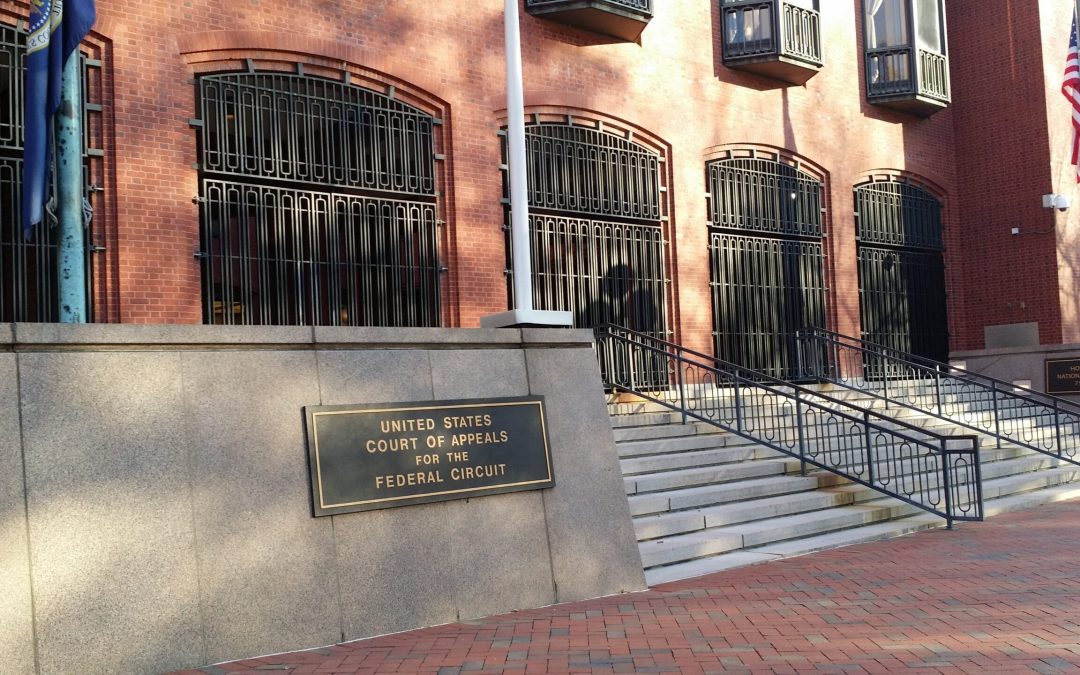
In Barron v. United States, No. 2025-1179 (Oct. 22, 2026), the U.S. Court of Appeals for the Federal Circuit affirmed the Court of Federal Claims’ rejection of property owners’ takings claims arising out of the conversion of a 7.68-mile stretch of a former rail line in Florida to recreational trail use.
Disclosure: we filed an amicus brief in support of the property owners in this case.
You know the drill. When the Surface Transportation Board issues a Notice of Interim Trail Use under the federal Trails Act, state-law reversionary interests that otherwise would take effect upon abandonment are delayed. If the railroad held only an easement, this interference is a taking of that reversionary interest. But if the railroad was granted a fee simple interest back in the day, there’s nothing to revert and thus no taking.
The corridor had been assembled in two ways: several deeds, and a 1920s Florida state court condemnation judgment. The Federal Circuit, purporting to apply state property law, concluded both conveyed fee-simple title.
According to the court, the deeds conveyed “all” of the grantors’ right, title, and interest in pieces, parcels, or strips of land, contained no reversionary clauses, and several stated that the property was conveyed “forever.” One deed used the words: “in fee simple forever.” Under the Florida Supreme Court’s Rogers formulation, when a deed is unambiguous, that’s pretty much that, and no resort to policy arguments or extrinsic evidence.
More interesting was the condemnation judgment. The 1926 judgment appropriated a “piece, parcel or strip of land” to the railroad” for use as a right of way.” That seems like an easement.
Not necessarily, according to the court. The Federal Circuit noted that “right of way” can describe either a right of passage over land or the strip of land itself upon which a railroad operates. Florida law likewise does not invariably equate a railroad “right of way” with an easement. Thus, the court concluded that the old condemnation judgment was ambiguous.
And once ambiguity opened the door to extrinsic evidence, the record of the condemnation proceeding supplied the answer. Proposed jury instructions from both sides referred to compensation for the “land sought to be taken,” and the parties’ joint stipulation similarly described the “land sought to be taken.” The Federal Circuit concluded these materials showed that the railroad had condemned the land itself, not merely acquired a right to use it. Fee simple.
No easement means no reversionary interest. No reversionary interest means the NITU didn’t take anything from these owners. Affirmed.
There’s a useful reminder here for rails-to-trails cases, and condemnation cases more generally: don’t assume “right of way” tells you what the property interest is. According to the Federal Circuit, sometimes it describes an easement, but it might also describe the land itself which points to some kind of interest — something more than an easement. Context, the governing state’s property law, and the language of the conveyance or condemnation judgment control.
But as our amicus brief argued, there are dangers in the Federal Circuit’s approach (let’s try to glean the intent of the parties to a conveyance in what is, in many Trails Act cases, a very old transaction), especially in the context of trying to figure out if the government is liable for a taking (we’re guessing this context makes any reviewing court lean away from “right of way” being an easement). At bottom, the Fifth Amendment limited the power of the condemnor back in the day to taking the minimum it needed for railroad purporses, and that minimum was not fee simple absolute. As our brief noted:
The U.S. Supreme Court confirms. It has concluded that when the federal government patented land to a private owner subject to a railroad “right of way,” it was describing an easement and not a fee simple interest. Brandt, 572 U.S. at 104. Historic practice also confirms. To operate railways, railroads didn’t need to own land, and most commonly didn’t want to. Rather, they needed to use land for their rail lines. The power to use the property of another is an easement. As the Supreme Court explains, “easements are not land, they merely burden land that continues to be owned by another.” Cowpasture River, 590 U.S. at 613–614 (citing Ely on Easements § 1:1) (“An easement is commonly defined as a nonpossessory interest in land of another.”)).
Stay tuned.
Barron v. United States, No. 2025-1179 (Fed. Cir. Oct. 22, 2026)
Recent Comments