
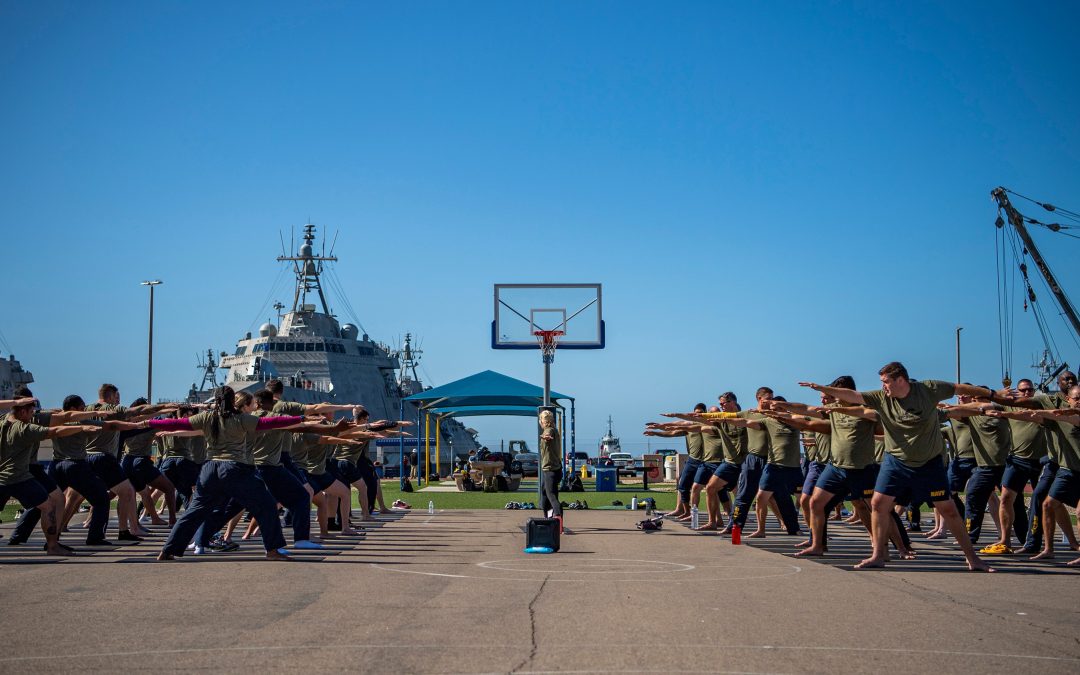
Amid a physical fitness reform effort across the military, the Navy is expanding a wellness program meant to help sailors live healthier through access to nutrition, strength, and mindfulness coaches.
The Human Performance Optimization program (HPO) launched in February at Naval Base San Diego. Rather than focus on twice-a-year fitness tests, HPO aims to help sailors build tailored, holistic fitness habits so they can stay in shape both on shore and at sea.
After a nine-month pilot program, the Navy announced on Monday that it is expanding HPO to nine more Navy bases around the world over the next 12 months. The new bases are:
- Naval Station Norfolk, Virginia
- Naval Station Mayport, Florida
- Naval Base Kitsap, Washington
- Joint Base Pearl Harbor-Hickam, Hawaii
- Commander Fleet Activities Yokosuka, Japan
- Naval Support Activity Naples, Italy
- Naval Air Station Patuxent River, Maryland
- Naval Construction Battalion Center Gulfport, Mississippi;
- Naval Station Rota, Spain.
“HPO gives sailors access to specialized expertise and science-backed resources to improve performance, prevent injuries, and build resilience,” Vice Adm. Brad Collins, head of Navy Installations Command, said in a press release. “Expanding these services is an investment in our people and the Navy’s ability to execute its mission.”
The three elements of HPO are cognition, nutrition, and strength. For the cognitive side, sports psychologists might work on mindfulness and breathing exercises with sailors, HPO assistant Kyle Morrison explained in a Navy video published Sept. 9. These include “day-to-day” tools that can help manage stress at work, at home, or on deployment, he said.
Diet and nutrition plans might be guided by an InBody body composition diagnostic test; while strength coaches can help sailors come up with workouts that they can apply on shore or on a ship, or anywhere their schedules or exercise equipment might be more limited.
“It allows us to program for specific situations that the Navy or any sailor in the Navy will experience … from the ships, from being on land,” Morrison said. “This prepares them for most, if not all, of what they’ll see on the physical side.”
The Navy did not immediately answer a question about how many additional staff or contractors would be needed to support the expansion.
A long-coming fitness overhaul
The move is the latest in a series of efforts across the military to help service members stay healthy year-round, not just ahead of a physical fitness test.
One such program is the Army’s holistic health and fitness program, or H2F, which emphasizes mental and spiritual well-being, getting enough rest, and eating right, as well as hitting the gym.
“Modeled after Special Forces and professional/collegiate athletics, the H2F system moves away from a one-size-fits-all model and acknowledges every soldier is unique, and different units have different missions,” the Army writes on its H2F website.
Meanwhile, the Space Force has an ongoing fitness assessment where guardians sport wearable fitness trackers, while the Air Force Fitness Program aims to encourage a “year-round physical conditioning program” that includes healthy eating and “an active lifestyle.
The military’s holistic health push was brought about, in part, by high rates of preventable injuries among troops. A 2019 study found that non-combat-related musculoskeletal injuries put about 68,000 troops on nondeployable status every year, and those injuries were often incurred during sports and training. These injuries result in millions of clinic visits, lost duty days, and dollars spent paying for treatment every year, the study said.
Top Stories This Week
Meanwhile, a 2022 study found that behavioral health conditions such as posttraumatic stress disorder, depression, and anxiety are the second most common medical reason for nondeployability in the Army.
But as the individual services strive for holistic fitness, Defense Secretary Pete Hegseth has pushed for stricter traditional physical fitness goals. In August, the Pentagon issued a memo calling for all troops in dedicated combat jobs to maintain a fitness score of at least 70%, though it let the services determine what that looks like in their service-specific scoring systems.
The Pentagon also issued a policy that unit leaders would be “held accountable” for their troops’ performance on physical fitness tests through Inspector General inspections.
Eventually, the Navy says it plans to expand its HPO program across all its shore bases worldwide.
The post Navy’s holistic health program expands to 10 bases amid broader military fitness overhaul appeared first on Task & Purpose.
Recent Comments