
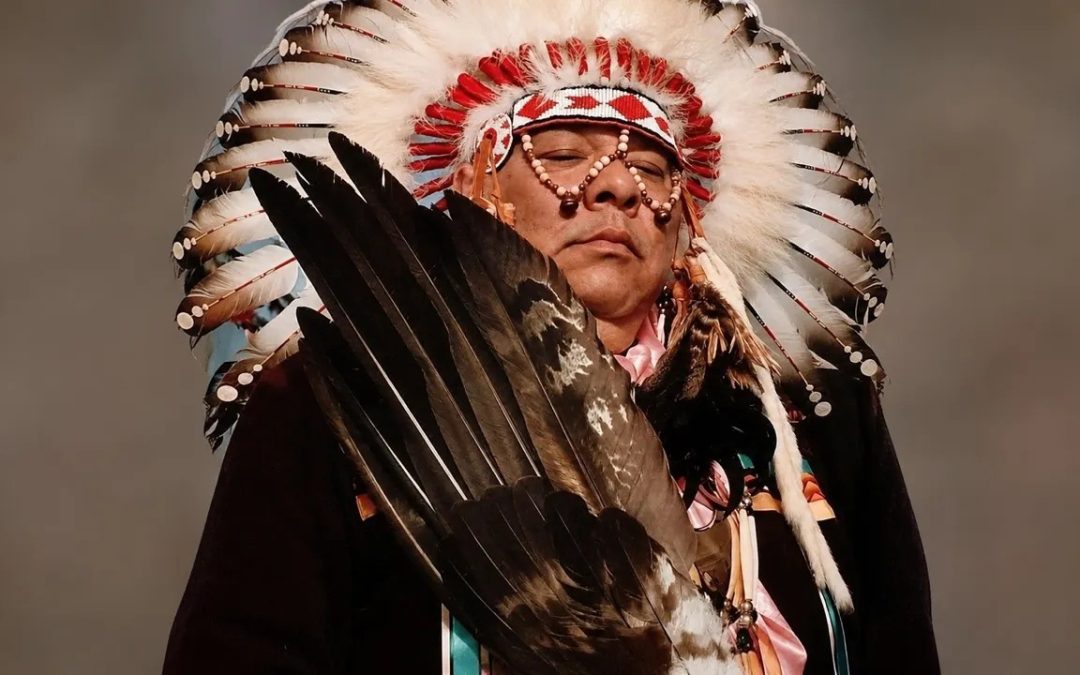
When Dr. Gregorio E. Kishketon enlisted in the Marine Corps at 17, he thought he was choosing a career. What he really found was a calling to serve others.
A member of the Kickapoo Tribe of Oklahoma and an Elder of the Water Clan and Bitter Water Clan, Kishketon spent years helping Native American and Alaska Native Veterans access the benefits and support they earned. Long after leaving the Marines, service remained at the center of his life.
“I learned that I was a leader,” he said. “People came to me for advice.”
That instinct began long before military service.
Guided by tradition
Growing up in Oklahoma City, Kishketon was surrounded by Native traditions and mentors who reinforced the importance of culture, responsibility and community. One of the most influential was his Native American teacher, Mrs. Pat Sapp, who taught students about their heritage through storytelling, Native sign language, traditional arts and cultural activities.
Today, as an Elder, he sees it as his responsibility to pass those lessons forward.
“Lead by example,” he shared.
Kishketon originally planned to join the Navy. A chance meeting with a Marine recruiter changed everything.
“By the evening, I was sold,” he recalled. “I wanted to be a Marine.”
His mother’s advice stayed with him throughout his military career: Never start something you don’t intend to finish, and always give your best effort.
Finding purpose through service
Serving from 1984 to 1991, Kishketon rose to the rank of staff sergeant and quickly earned a reputation for leadership. Early in his career, a drill instructor told him that some of the best Marines were Native Americans, words that reinforced his determination to excel.
His service earned recognition as Marine of the Month in 1985, along with three Meritorious Masts and selection to three meritorious promotion boards.
Marines sought him out for guidance, a role that would define much of his life after the military.
Leaving the Corps was difficult.
“I missed the brotherhood,” he said.
But military discipline helped him find a new purpose. Guided by his Native identity and inspired by mentors such as American Indian Movement co-founder Russell Means, Kishketon dedicated his career to serving Native communities and Native Veterans.
Over the years, he served in several federal agencies and became a leading advocate for Native Veterans within VA. As a program analyst in VA’s Office of the Secretary, Center for Minority Veterans, serving as the Native American/Alaska Native Veterans liaison, Kishketon worked across Indian Country to strengthen partnerships with tribal communities and connect Native Veterans with earned benefits and services.
His work took him to powwows, Veteran gatherings and tribal communities nationwide, where he built relationships founded on trust.
“There, people trusted and respected me,” he said. “It’s hard to gain that trust, and even harder to regain it if you lose it.”
A legacy of trust
For Kishketon, the most meaningful measure of success has never been a title. It is the people who still reach out to tell him how his guidance changed their lives.
As he approached retirement, former colleagues, Veterans and community members thanked him for mentoring them, opening doors and encouraging them to pursue opportunities they never thought possible.
One Native professional recently credited Kishketon with helping guide her toward a career with the Bureau of Indian Education. Moments like that remind him why service matters.
“You never realize the impact you make,” he said.
That impact extends beyond government service. In 2023, Kishketon was recognized as an Oklahoma Elders Honoree, an acknowledgment of both his leadership and commitment to Native communities. He also broke barriers as the first Native American to serve on the Board of Trustees of Saint Augustine’s University, a historically Black university in Raleigh, North Carolina.
Still, Kishketon believes his greatest accomplishment is helping others succeed.
“Verbal knowledge is very important in Native communities,” he said. “That’s how we pass on our experiences.”
Today, he remains active in advocacy efforts supporting tribal sovereignty, Native rights and Native Veterans. He continues advising tribal leaders and mentoring younger generations, fulfilling what he believes is one of an Elder’s most important responsibilities.
Looking back, Kishketon sees a clear connection between the young Marine who wanted to serve and the Elder who continues that mission today.
“I went from uniform to unforgettable,” he said, “because of the person I became through all of my experiences in life and my military career.”
Recent Comments