
Please note that SCOTUS Outside Opinions constitute the views of outside contributors and do not reflect the opinions of SCOTUSblog or its staff.
***
On November 10, The New York Times published an article suggesting that a major piece of the Supreme Court’s Second Amendment jurisprudence is premised on a misquote by the late Justice Antonin Scalia in his 2008 majority opinion in D.C v. Heller, in which the court held that there was an individual right to possess firearms. The essence of the piece is that Scalia used the phrase “dangerous and unusual” to describe those weapons not protected by the right to keep and bear arms, attributing this terminology primarily (or perhaps solely) to the 18th century British jurist William Blackstone. Yet Blackstone’s writings instead use the phrase “dangerous or unusual.”
According to the Times piece, “[t]he consequences of Justice Scalia’s use of ‘and’ rather than ‘or’ have been profound”: “Since all guns are dangerous, courts have had to focus instead on determining whether a type of firearm is unusual, often parsing marketing data and consumer surveys to gauge a weapon’s popularity.” Presumably, if Scalia had used the phrase “dangerous or unusual,” it would be easier for legislatures to ban even certain commonly owned firearms because dangerousness alone would be sufficient to bring a category of weapons outside the amendment’s protective sphere.
The Times story has reverberated quickly, with strong backlash from conservative lawyers and scholars. Such disagreements have focused largely on the specific citation Scalia used. Law professor Jonathan Adler, for example, has argued that the citation to Blackstone was one among many, and additional sources that Scalia cited used the “and” formulation. Others have responded that Scalia was anything but sloppy, which would be especially true when it came to such an influential and important source.
Both sides, though, seem to be burying the lede. In my view, this is a story not about historical errors or the nuances of legal citation. Rather, it is about how judicial dicta that was never intended to lay down broad, permanent rules has taken on a life of its own, and how other justices on the Supreme Court subsequently canonized Scalia’s stray language by turning it into a “test” that would govern any number of future cases – when it’s not at all clear Scalia ever contemplated this or would have endorsed any such thing.
***
As most law students and lawyers are well aware, the holding-dicta distinction is deeply rooted in American jurisprudence: generally speaking, the holding is the analysis necessary to resolve the actual case before the court, and everything else in an opinion is dicta (this comes from the Latin phrase “obiter dictum,” or “said in passing”). Fundamental to that distinction is that dicta, while it may be persuasive, is not precedential. As Chief Justice John Marshall wrote in 1821, the reason for not deferring blindly to dicta is “obvious”:
The question actually before the Court is investigated with care, and considered in its full extent. Other principles which may serve to illustrate it, are considered in their relation to the case decided, but their possible bearing on all other cases is seldom completely investigated.
The late Judge Richard Posner once similarly emphasized the risk that dicta “can be misleading if carelessly lifted from the case-specific contexts in which they were originally uttered … That is why courts in assessing the binding effect of previous decisions distinguish between the dicta, which are the inessential parts of the opinion, and the holding.” Circuits vary in their approach to Supreme Court dicta, generally deferring more heavily to such language when they find it thoroughly considered or supported, but the court is, of course, never bound by its own dicta.
In fact, Scalia himself was no fan of relying heavily on dicta from prior Supreme Court decisions. In a 1993 opinion, he criticized a group of dissenting justices by noting that their position found “support, if at all, only in the dicta of this Court’s opinions.” This was, in Scalia’s view, as good as no support at all. Indeed, Scalia rejected reliance on “drive-by … rulings” not fully considered by the issuing court, even if not purely dicta. In his 2015 decision for the court in Kerry v. Din, Scalia excoriated a proposition advanced in a dissenting opinion as resting solely on “dictum in a footnote” and then observed that “[t]he footnoted dictum that Justice Breyer proposes to elevate to constitutional law is a dangerous doctrine.” He further joined opinions that rejected prior dicta as unprincipled, especially when greater investigation revealed reasons for caution.
Scalia’s position was nuanced – for example, he once joined a dissent by Justice Ruth Bader Ginsburg that endorsed reliance on certain dictum as persuasive – yet a cautious approach to dicta is consistent with his broader judicial philosophy as well. He was at times willing to jettison even precedential decisions squarely applicable to the case at hand when those decisions were contrary to original public meaning. Unconsidered dicta, presumably, would then be far lower in the pecking order.
***
Returning to Heller and the phrase at issue, it’s hard to argue that the “dangerous and unusual” passage from Heller is anything but dicta. The issue in Heller was whether a Washington, D.C. ordinance “generally prohibit[ing] the possession of handguns” violated the Second Amendment, or if there was an individual right to keep arms for one’s self-defense. Scalia’s majority opinion answered in the affirmative, as “the American people have considered the handgun to be the quintessential self-defense weapon.” D.C. never argued that handguns were entirely exempt from protection because they were especially dangerous. The question of dangerous and/or unusual weapons was not at issue in the case; accordingly, it wasn’t thoroughly investigated through the adversarial process.
Rather, after canvassing the historical evidence and concluding it supported an individual-rights view of the Second Amendment, Scalia turned to the nature of the right he had just explicated. In three short paragraphs not necessary to the holding, he explained why the amendment did not authorize gun keeping-and-carrying by anyone in any circumstance; rather history revealed limitations on the right, such as “the carrying of ‘dangerous and unusual weapons.’”
Whatever the purpose of this section – Justice John Paul Stevens later suggested the language was proposed by Justice Anthony Kennedy (the crucial fifth vote in Heller) in exchange for joining the majority – it was far from necessary to resolve the case at hand.
So how did such dicta become relevant? In the 2016 case Caetano v. Massachusetts, decided after Scalia had passed away, the justices unanimously overturned a Massachusetts Supreme Court decision upholding that state’s ban on stun guns in a criminal prosecution of a woman who used this weapon to defend herself from an abusive ex-boyfriend. Justice Samuel Alito issued a concurring opinion (joined by Justice Clarence Thomas) that performed an interesting maneuver. Seizing on the fact that the per curiam opinion in that case referenced Scalia’s “dangerous and unusual” formulation, Alito turned Scalia’s language into a doctrinal test: “As the per curiam opinion recognizes, this is a conjunctive test: A weapon may not be banned unless it is both dangerous and unusual.” But the per curiam had done no such thing; rather, that opinion simply cited the passage in Heller as referring to one limitation on the right to keep and bear arms. And the per curiam said that the lower court in that case had faltered by concluding that any weapon not in common use in 1791 was per se unusual, not by failing to use a conjunctive test.
(Ironically, Alito has his own well-publicized objections to giving past Supreme Court dicta undue veneration – his opinion for the court in Dobbs heavily suggested that Roe’s viability framework was entitled to less weight in the stare decisis analysis because it was initially mere dicta, “the Court’s own brainchild [for which n]either party advocated.”)
From there, the “dangerous and unusual” language took on a life of its own. In 2022’s New York State Rifle & Pistol Association v. Bruen, in which the court struck down New York’s concealed-carry law, the majority set forth a test for Second Amendment constitutionality privileging historical evidence above all else. At the first step of that test, a court determines whether the conduct at issue is protected by the right to keep and bear arms, which is where the exclusion of dangerous and/or unusual weapons becomes relevant. If the banned weapon is not protected by the Second Amendment (for, say, being “dangerous and unusual”), a constitutional challenge is dead on arrival. If, on the other hand, the plaintiff can show the weapons are protected, then the burden switches to the government to provide historical evidence to support its regulation. (The consequences may be even greater, as some have argued that “usualness” (or “common use”) conclusively establishes not only threshold protection for the weapon but also that any legislative ban is ahistorical and thus unconstitutional.)
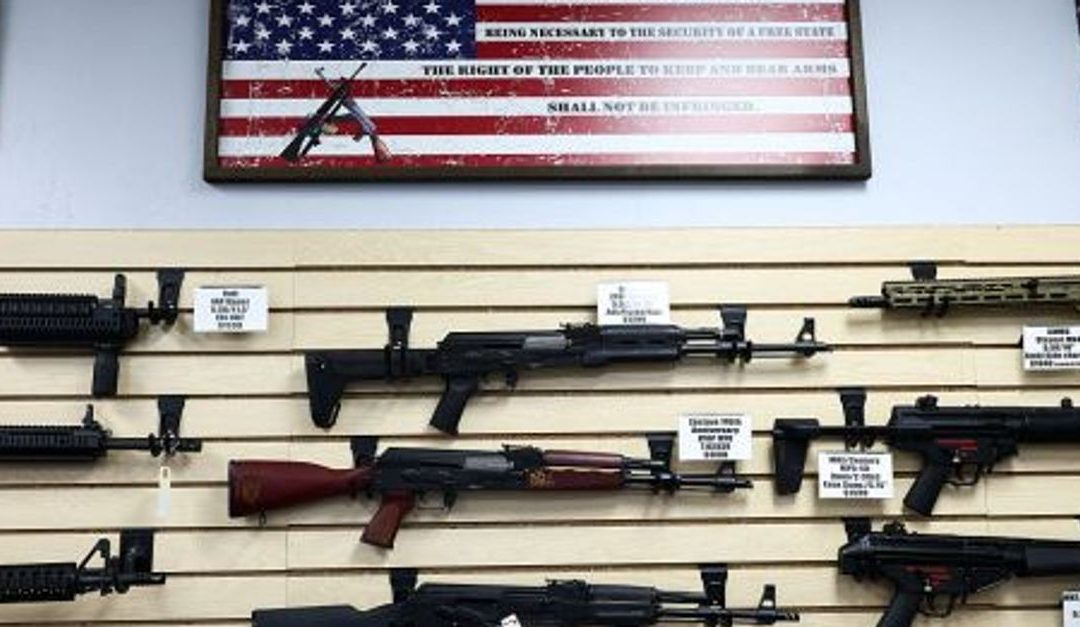
This test has divided the judiciary in recent years. For example, a Massachusetts federal judge evaluating a challenge to that state’s AR-15 ban recognized the apparent disconnect between Heller and Blackstone but nevertheless noted that “the Supreme Court has expressly stated . . .that the relevant tradition is one of regulating ‘dangerous and unusual weapons.’” The Massachusetts judge found these weapons were not in “common use,” and, in any event, a historical tradition of responding to technological advances by regulating specific weapons supported the ban. By contrast, the U.S. Court of Appeals for the 3rd Circuit interpreted Scalia’s language to signal that widespread ownership of AR-15s and large-capacity magazines meant any legislative attempt to ban them was unconstitutional. The “dangerous and unusual” framework has led other judges on a search for ownership statistics and sales data to assess a weapon’s popularity, triggering sharp debate over whether a test that ultimately turns on commonality is even workable.
This is particularly relevant since the court is currently preparing to hear oral argument in Viramontes v. Cook County, a Second Amendment challenge to state and local bans on AR-15s, on December 2. While the recent attention to Scalia’s citation may trigger discussion at oral argument, most justices are now likely to treat “dangerous and unusual” as an established standard and ownership statistics as definitive proof that AR-15s are not unusual and thus protected. Absent from this, however, will be the fact that this standard did not emerge from any well-reasoned, litigation-tested analysis making it deserve deference in the first place – especially under Scalia’s own approach to judging.
The debate over Scalia’s Blackstone citation, then, has obscured a more important problem: the Supreme Court’s decision to treat its past dicta as doctrine that can settle the outcome of cases on which the court has never passed.
Recent Comments