
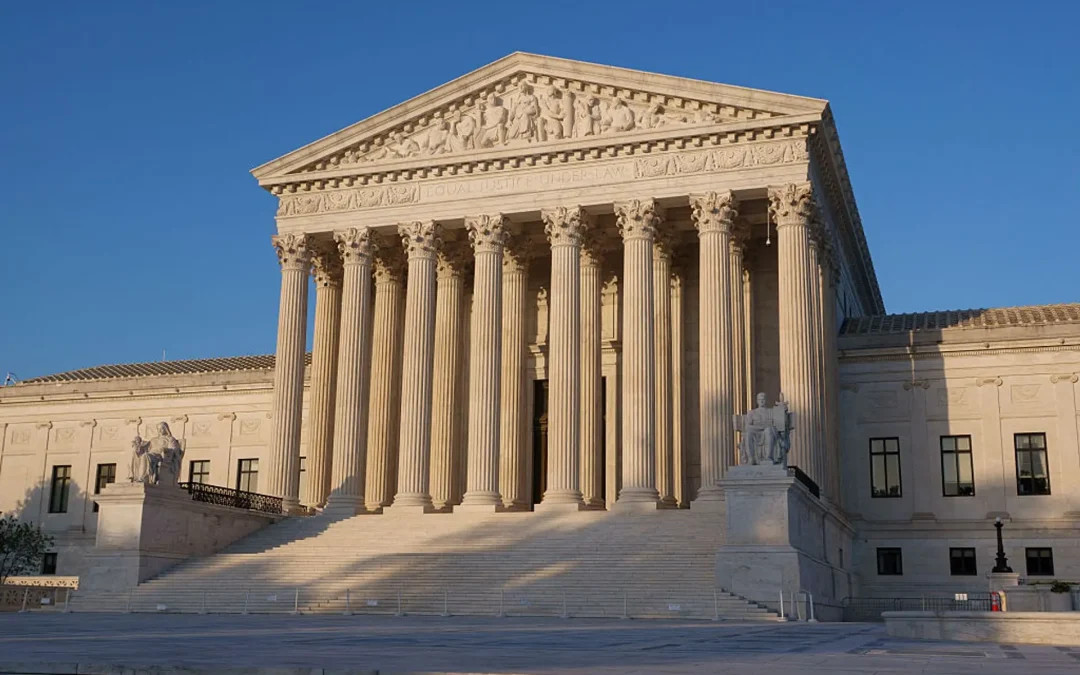
The Supreme Court on Friday afternoon added a new case to its oral argument docket for the 2026-27 term, granting a petition for review filed by Goldman Sachs Bank in a case over whether and when a bankruptcy court can override the Federal Arbitration Act and refuse to honor an agreement to arbitrate disputes.
The dispute in which the justices agreed to weigh in, Goldman Sachs Bank USA v. Brown, began three years ago, when Rhea Brown and Gregory Maze filed for bankruptcy. Both listed credit card debts with Goldman Sachs Bank as one of their debts.
The Bankruptcy Code imposes an automatic stay, which (among other things) bars creditors from attempting to collect debts from someone who has filed for bankruptcy. Because Goldman Sachs, according to Maze and Brown, repeatedly continued to try to seek payment of their credit card debts, they filed an adversary proceeding (that is, a separate lawsuit within the broader bankruptcy case) against the bank, in which they contended that the bank had willfully violated the automatic stay provision.
Pointing to an arbitration clause in their credit card agreements, Goldman Sachs asked the bankruptcy court to put the adversary proceeding on hold and require Brown and Maze to arbitrate their dispute. The bankruptcy court denied that request, and both the federal district court and the U.S. Court of Appeals for the 4th Circuit upheld that ruling. A divided three-judge panel of the 4th Circuit concluded that requiring Brown and Maze to arbitrate their claim “would interfere and conflict with the strong and established policies and purposes of the Bankruptcy Code.”
Goldman Sachs came to the Supreme Court in June, asking the justices to take up its case. It told the court that the 4th Circuit’s ruling squarely conflicted with a decision by the U.S. Court of Appeals for the 2nd Circuit. Moreover, it added, “[t]he practical stakes of these issues are enormous” because of the ubiquity of arbitration clauses in consumer credit agreements. The 4th Circuit’s decision, it said, “imperils the enforceability of arbitration agreements in many of them.”
After considering Goldman Sachs’ petition for review at four consecutive conferences, the justices granted it on Friday afternoon. The case likely will be argued sometime next year, with a decision to follow by late June or early July.
More orders from the justices’ private conference on Friday are expected at 9:30 a.m. EST on Monday.
Recent Comments