
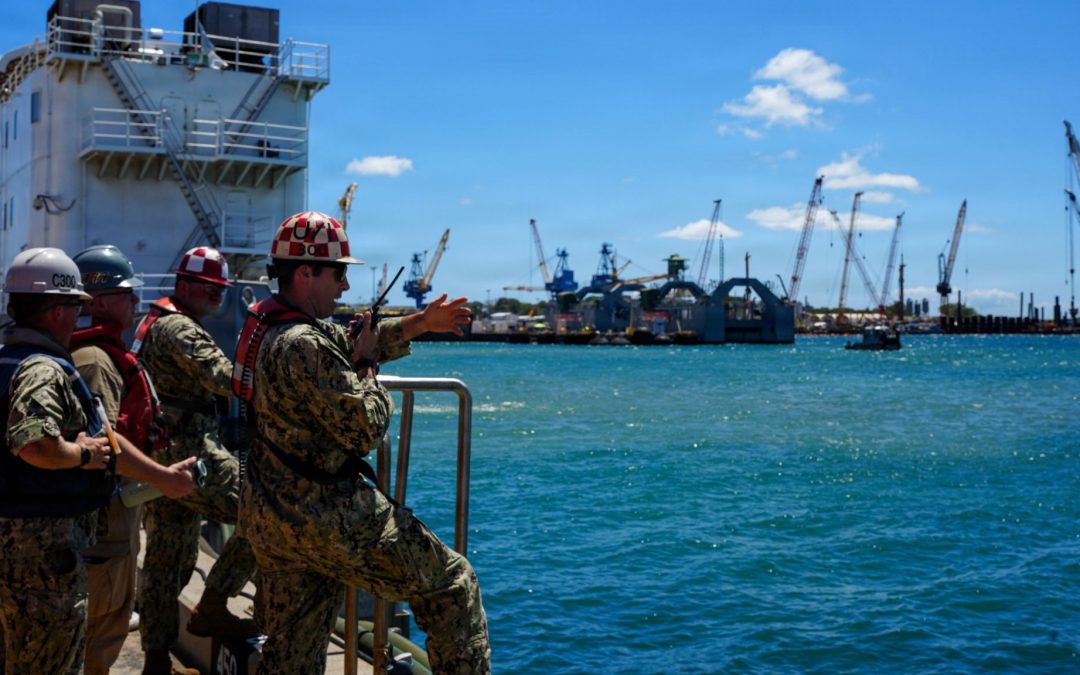
The Navy’s plan to modernize and upgrade its four shipyards in the coming years could take half a century and cost more than $200 billion, a new report found.
The Government Accountability Office released a new report on the Navy’s Shipyard Infrastructure Optimization Program (SIOP) on Friday. The report, “Naval Shipyards: Complete Information Needed for Decision-Making on Multibillion-Dollar, 50-Year Infrastructure Program,” found that the price tag has noticeably grown since it started, and that the effort lacks plans for regular reviews of its progress. That lack of oversight and evaluations risks further cost increases and new challenges.
“However, the Navy has not outlined steps in the framework to reevaluate program objectives and resources as the program progresses over the next several decades,” the report said. “Without building such reviews into key future decision points, the Navy is limiting its ability to ensure that capabilities in SIOP’s plans today continue to be aligned or adjusted to support future fleet warfighting needs.”
The Navy currently has four shipyards: Pearl Harbor in Hawaii; Norfolk, Virginia; Puget Sound, Washington; and Kittery, Maine. The shipyards are “essential” to maintaining operational readiness for the Navy’s ships, specifically its carriers and submarines, but they currently have outdated infrastructure and poor conditions, the GAO said. The overhaul program was started in 2018 and aims to give the shipyards new equipment as well as new or upgraded dry docks to better service the fleet.
Diana Moldafsky, who directed the review for the GAO, said the program is based on a set of assumptions about the future fleet: how many ships and submarines the Navy will have, their maintenance needs and deployment schedules. But those projections are likely to change over the years.
“Our concern is that without periodic reviews the Navy risks making very large long-term shipyard investments that may not match its evolving needs. Our recommendation takes the oversight structure from Navy acquisition programs that SIOP is already doing and layers another element,” Moldafsky told Task & Purpose. “That’s why we recommended building in reviews into key decision points to reassess the underlying business case, affordability and sustainability of SIOP — these are all elements that GAO has seen as beneficial practices from commercial companies.”
The Navy’s shipbuilding efforts have struggled in recent years. A GAO report last year found that the fleet had not grown, despite massive budget increases. The delays stemmed from a lack of space at shipyards to meet the volume of demand, as well as a lack of workers to meet that scale.
The watchdog released three recommendations to the Navy including creating specific oversight steps, such as periodic evaluations and better documenting of key program organizations and their responsibilities.
The post The Navy’s shipyard upgrades could take 50 years, cost $200 billion appeared first on Task & Purpose.
Recent Comments