
Six years after being reprimanded for attending a Black Lives Matter protest, an Army reservist’s free speech case is going to trial. The soldier’s lawsuit is over a policy that he says gives commanders control over service members’ right to peacefully protest while off-duty, out-of-uniform, and off-post while in the United States.
Maj. Alan Kennedy was a captain in the Colorado Army National Guard on May 30, 2020, when he attended a protest while off-duty in Denver after George Floyd was killed by police in Minnesota. The military attorney later wrote an op-ed in the Denver Post about the aggressive police response to the protest, which included rubber bullets, tear gas and flashbang grenades.
The op-ed included a disclaimer that the views expressed in it were his own and not those of the National Guard.
The Colorado National Guard launched an investigation into whether Kennedy had violated any Army policies in attending the protest or writing the op-ed. The investigation found no wrongdoing, according to a copy filed as a court document. Specifically, it found that Kennedy had not violated Department of Defense Instruction (DODI) 1325.06, which prohibits service members from participating in any demonstrations where “violence is likely to result,” even if they are off-duty, off-post, and out of uniform.
But Col. Charles Beatty, then-chief of staff for the Colorado National Guard, thought differently, directing another guardsman to issue Kennedy a letter of reprimand and arguing that Black Lives Matter protests “begin peacefully and devolve into violent clashes with the police.”
Kennedy said in court documents that he was then hit with “a cascade of reprimands, negative evaluations and other detrimental actions,” affecting his career. He filed a lawsuit in 2021, arguing that the National Guard violated his First Amendment rights.
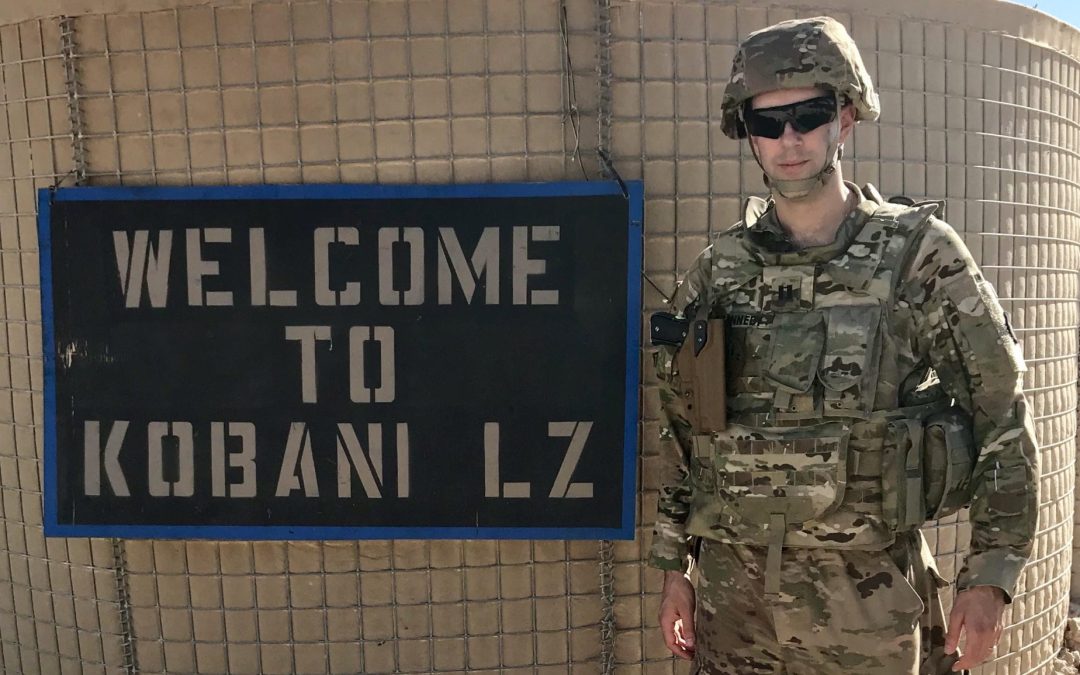
Kennedy has since transferred to the Army Reserve and been promoted to major, but he said he was passed over for a prestigious, paid, degree-conferring, in-resident military legal education program because of the negative evaluations and reprimands.
The reprimand was overturned in 2022, but the suit continued through Nov. 4 of this year, when Colorado District Court Judge William Martínez ruled that Kennedy’s case could move to trial by a jury. No trial date has been set yet.
Task & Purpose reached out to the Colorado National Guard, but it did not respond in time for comment.
“The chilling effect”
At the heart of the case is DODI 1325.06 Enclosure 3, paragraph 6(d), which prohibits service members from participating in any off-post demonstrations where “violence is likely to result.”
Kennedy says that language lets commanders decide whether violence is likely to result at a demonstration a service member participates in, regardless of whether the violence could have been foreseen or takes place.
“How does a commander make the determination about whether violence is likely to result?” Kennedy said in an interview with Task & Purpose.
If service members take part in violence or break the law, then a different set of regulations apply. For example, a separate section of DODI 1325.06 prohibits “extremist activities,” including “advocating or engaging in unlawful force, unlawful violence, or other illegal means to deprive individuals of their rights[.]”
Top Stories This Week
But if a commander can decide whether violence is likely to result in a peaceful protest, Kennedy argued, then it produces a chilling effect for service members who want to participate while off-duty, off-post, out of uniform, and in the United States.
“For me, the big piece is the chilling effect,” Kennedy said. “As long as this protest ban exists, no service member is safe from retaliation for peacefully protesting, because it opens the door for commanders to punish views that they don’t like.”
Should the ruling go in Kennedy’s favor, it may strike down the regulation as unconstitutional when applied to his case. That could set a precedent for future cases where plaintiffs feel their First Amendment rights have been violated in regard to the “violence is likely” section of DODI 1325.06.
If the jury does not rule in Kennedy’s favor, it would set a precedent in the opposite direction, reinforcing commanders’ discretion over whether violence is likely at a given demonstration.
The post Six years later, an Army reservist’s free speech lawsuit is going to trial appeared first on Task & Purpose.
Recent Comments